
Key Takeaways
- The US electric vehicle market experienced a 28% sales drop in Q1 and a 2% decrease in 2023, partly due to the cancellation of the $7,500 federal tax credit.
- In stark contrast, Europe’s EV market saw nearly 30% growth in 2023, continuing into the early months of 2024.
- A critical gap in the US market is the availability of affordable, practical, and no-frills European electric vehicles.
- Four specific European EVs—the Cupra Born, Fiat Grande Panda, Renault 5, and Volkswagen ID.7—are identified as having strong potential for success in America, provided they are priced competitively.
- These models offer varied options, from sporty hatchbacks to spacious sedans, addressing different consumer needs for price, performance, and utility in the evolving electric landscape.
While the European electric vehicles market continues to demonstrate robust growth, its counterpart in the United States faces significant headwinds. Industry experts estimate a 28% decline in electric vehicle sales during the first quarter of this year. This downturn follows a 2% decrease recorded last year, a trend attributed in part to the discontinuation of the $7,500 federal tax credit, which previously incentivized EV purchases.
Conversely, Europe has witnessed a substantial surge in electric car adoption. Last year alone, sales figures climbed by nearly 30%, with the upward trajectory showing no signs of abatement in the initial months of 2024. This divergence prompts a crucial question: Could some of Europe’s most successful and accessible electric vehicle models provide a much-needed impetus to the American market if introduced stateside?

The discussion around affordable electric vehicles in the US often includes the prospect of Chinese-made EVs, a route Canada is reportedly exploring. However, the American market is unlikely to see such imports in the immediate future. This context highlights an opportunity for established European automakers to fill a perceived void with their diverse range of European electric vehicles, especially those that prioritize affordability and practicality over high-end luxury.
The key determinant for their potential success in America, as with any vehicle, would ultimately be pricing. Learning from past experiences, such as the market’s reception to the Volvo EX30, underscores the sensitivity of US consumers to value propositions in the rapidly evolving EV segment. The prevailing sentiment suggests a strong demand for more accessible, no-frills options that cater to everyday transportation needs without prohibitive costs.
The Current State of Electric Vehicles in the US
The challenges facing the American electric vehicle market extend beyond the cessation of federal incentives. Factors such as a perceived lack of charging infrastructure, range anxiety among potential buyers, and a market saturated with higher-priced models have contributed to a slowdown in adoption rates. Consumers are increasingly scrutinizing the total cost of ownership, including the initial purchase price, and seeking practical alternatives for their daily commutes and longer journeys.

The absence of a diverse array of budget-friendly electric options leaves a significant segment of the market underserved. While several automakers are investing heavily in premium EVs and electric trucks, the demand for compact, efficient, and economically viable European electric vehicles remains largely unmet. This gap presents a strategic opening for European brands known for their smaller, urban-friendly models.
European Electric Vehicles Poised for American Roads
Several European electric vehicles currently thriving across the Atlantic could offer compelling solutions for US consumers. These models distinguish themselves through a blend of innovative design, efficient performance, and, crucially, competitive pricing in their home markets. Their introduction could broaden the appeal of EVs in America, attracting buyers who have been hesitant due to current market offerings.
Cupra Born: A Sporty Hatchback Alternative
- European Price: From €40,450 (approximately $46,700 USD)
- WLTP Range: From 428 km (266 miles)
Cupra, a performance-oriented brand under the vast Volkswagen Group, had previously signaled intentions to enter the US market. While those plans are currently on hold amid the unpredictable nature of the American car market, the Cupra Born stands out as a strong contender. This four-door electric hatchback is built on the same versatile MEB platform as the Volkswagen ID.3, a vehicle often considered the modern electric successor to the iconic Golf.
The Born offers a distinct driving experience compared to its ID.3 sibling, thanks to a sportier chassis setup and a rear-wheel-drive powertrain. This configuration translates into a more engaging and enjoyable drive, differentiating it from many conventional commuter cars. With a base trim delivering 204 horsepower and a sportier variant pushing output to 326 horsepower, the Cupra Born could carve out a niche against rivals such as the Nissan Leaf and the now-discontinued Chevrolet Bolt EV, appealing to those seeking an electric car with character and agility.
Fiat Grande Panda: Practicality Meets Affordability
- European Price: From €24,990 (approximately $28,900 USD)
- WLTP Range: From 320 km (199 miles)
Fiat’s presence in the US market is currently limited to the electric 500e, a stylish urban compact celebrated for its design but often criticized for its higher price point and constrained interior space. The introduction of the new Fiat Grande Panda EV could effectively address these concerns. Positioned as a more spacious and affordable alternative, the Grande Panda boasts a larger, albeit more utilitarian, cabin.
Despite its small car classification, the Grande Panda features four doors, enhancing its practicality for everyday use. Its “no-nonsense” approach and unpretentious design ethos could resonate with American consumers seeking functional and reliable transportation. Innovative features, such as a built-in Level 2 charging cable cleverly integrated into the nose, underscore its user-centric design. Furthermore, its robust, “chunky” styling offers a more commanding presence than many city cars that have struggled to gain traction in the US.
Renault 5: A Modern Take on a Classic
- European Price: From €28,000 (approximately $32,350 USD)
- WLTP Range: From 312 km (194 miles)
For those familiar with automotive history, the name “Le Car” might evoke memories of Renault’s previous attempt to market the original Renault 5 in the United States. That venture, however, did not achieve widespread success. Fast forward to the present, and a brand-new, all-electric Renault 5 is making waves in Europe. This modern iteration is garnering significant praise for its appealing aesthetics, enjoyable driving dynamics, and accessible price point.
As a compact electric car, the new Renault 5 exemplifies the kind of efficient and charming European electric vehicles that could diversify the US market. While small hatchbacks have historically faced challenges in the American automotive landscape, the distinct design and practicality of the new Renault 5 might break through this barrier. Its unique offerings, even down to official accessories like a baguette holder, highlight a personality that could attract a new segment of buyers looking for something different and engaging in their electric commuter car.
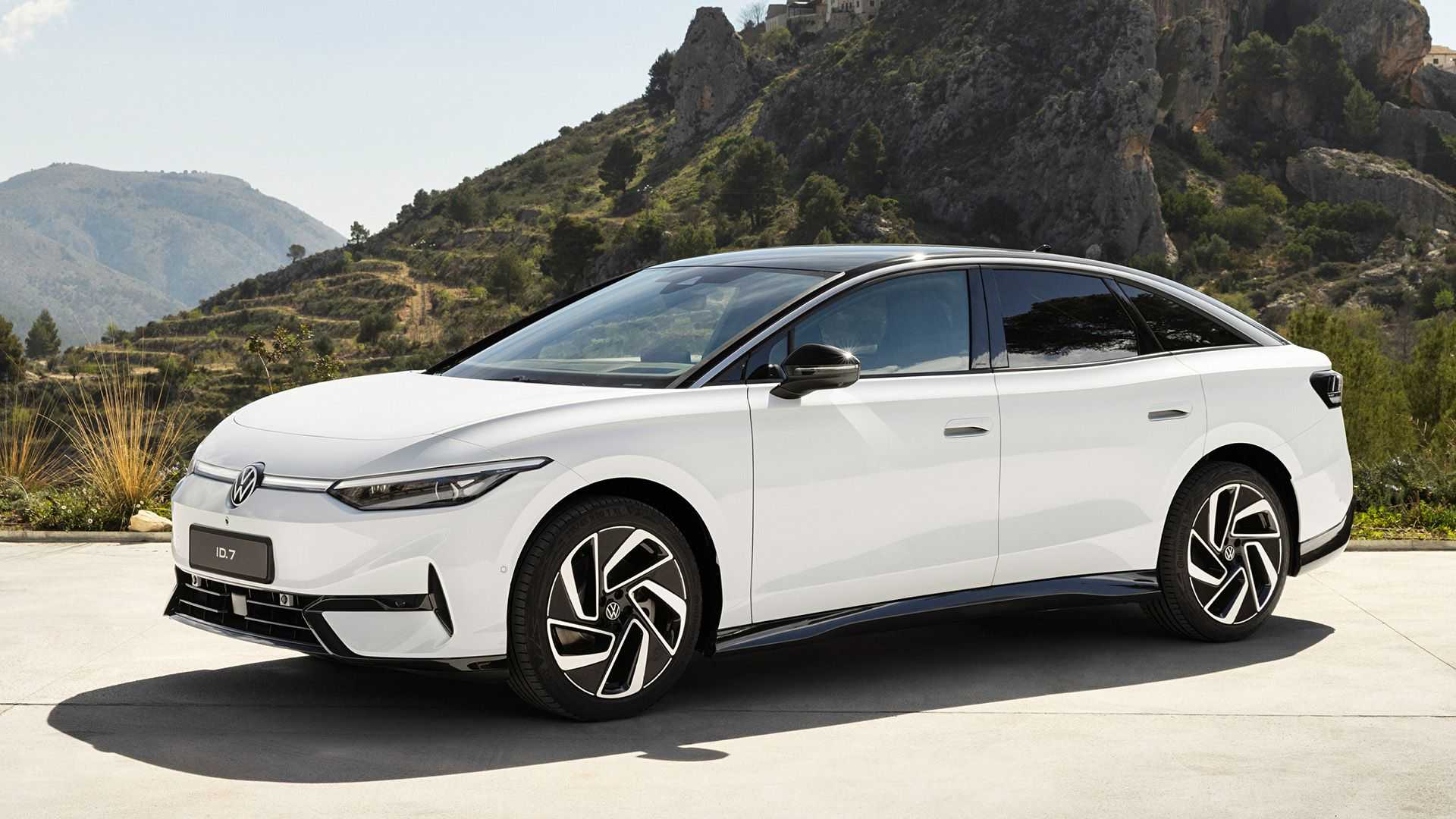
Volkswagen ID.7: The Electric Sedan for Long Hauls
- European Price: From €54,505 (approximately $62,900 USD)
- WLTP Range: From 599 km (372 miles)
The Volkswagen ID.7 stands out as the only vehicle on this list that came close to a confirmed US launch before the German automaker reversed its decision. Citing a “challenging EV climate,” Volkswagen opted to put its US introduction on hold. Designed as the all-electric successor to the popular Passat sedan, the ID.7 is engineered for comfort and efficiency, making it an ideal choice for longer journeys and highway cruising.
The vehicle’s smooth road-tripping capabilities were notably highlighted by our former editor-in-chief, who experienced its performance on Germany’s Autobahn. With the Tesla Model S effectively “out of the picture” in terms of new sales for many buyers, the ID.7 could present a formidable alternative in the premium electric sedan segment. Furthermore, the availability of a versatile wagon version in Europe adds another dimension of practicality and appeal, catering to different lifestyle needs that are currently underserved in the American EV market.
Bridging the Atlantic Divide for Electric Vehicles
The stark contrast between the flourishing European electric vehicles market and the more subdued pace of EV adoption in the US underscores a fundamental difference in market needs and product availability. While American consumers have shown enthusiasm for larger, more powerful electric vehicles, there is a clear and growing demand for more practical, affordable, and diverse options.
The potential introduction of these European models—the Cupra Born, Fiat Grande Panda, Renault 5, and Volkswagen ID.7—could be a pivotal moment. By offering well-designed, competitively priced electric cars that align with everyday commuting needs and urban lifestyles, European automakers could play a crucial role in accelerating the transition to electric mobility in the United States. Their success would hinge on strategic pricing, effective marketing, and a clear understanding of American consumer preferences for range, charging convenience, and overall value in the evolving electric landscape.
FAQ Section
Why is the US EV market slowing down compared to Europe?
The US market experienced a Q1 sales drop of 28% and a 2% decrease in 2023, partly due to the cancellation of the $7,500 federal tax credit. Other factors include concerns over charging infrastructure, perceived high costs of electric vehicles, and a market primarily focused on premium models, leaving an affordability gap.
What makes European electric vehicles potentially suitable for the US market?
European EVs often prioritize compactness, efficiency, and affordability, which can address the current demand for more practical and budget-friendly options in the US. Models like the Fiat Grande Panda and Renault 5 offer compelling value and design, contrasting with the larger, more expensive vehicles prevalent in America.
Are there any specific features that make these European EVs stand out?
Yes, the Cupra Born offers sporty handling and a powerful powertrain. The Fiat Grande Panda provides a spacious, unpretentious cabin and a unique built-in Level 2 charging cable. The Renault 5 brings iconic design and affordability, while the Volkswagen ID.7 delivers executive-level comfort and range, ideal for road trips.
Why was the Volkswagen ID.7’s US launch delayed?
Volkswagen postponed the ID.7’s introduction to the US market, citing an “ongoing challenging EV climate.” This decision likely reflects concerns about market stability, competitive pressures, and the overall pace of electric vehicle adoption in the United States, which made a timely launch less strategically viable.
How important is pricing for these European EVs to succeed in America?
Pricing is critically important. American consumers are sensitive to the overall value proposition, and previous instances, like the Volvo EX30’s market reception, have shown that even well-regarded European electric vehicles need competitive pricing to gain significant traction. Affordable options could unlock a broader customer base.