
Key Takeaways:
- The U.S. electric vehicle (EV) market experienced a notable slowdown, with sales decreasing by 28% in the first quarter of 2024 and 2% in the preceding year, partly influenced by the discontinuation of the $7,500 federal tax credit.
- Conversely, Europe’s EV sector is demonstrating significant growth, achieving a nearly 30% increase in sales last year and maintaining strong momentum into early 2026.
- This divergence points to a potential underserved segment in the American market: accessible, no-frills electric vehicles that offer practical utility without premium price tags.
- Four specific European electric vehicles – the Cupra Born, Fiat Grande Panda, Renault 5 E-Tech, and Volkswagen ID.7 – have been identified as models that could introduce much-needed diversity and affordability to the U.S. EV landscape.
- The successful integration of these European electric vehicles into the American market largely depends on competitive pricing strategies and effectively navigating regulatory and distribution challenges.
A Tale of Two EV Markets: Divergent Trajectories
The global electric vehicle landscape currently presents a striking contrast, particularly between the United States and Europe. While the European market continues to experience robust expansion, the American EV sector is navigating a period of significant headwinds and decelerated growth. This disparity underscores crucial differences in consumer preferences, policy environments, and available vehicle offerings, prompting an examination of how certain successful European electric vehicles might address the challenges faced by U.S. consumers.

Analysis of market data reveals a notable slowdown in American electric car sales. Experts estimate that sales in the first quarter of 2024 witnessed a substantial drop of 28%. This follows a challenging 2023, which saw a 2% decrease in sales, attributed in part to the cancellation of the $7,500 federal tax credit. The absence of such incentives, coupled with other market dynamics, has evidently impacted consumer enthusiasm and purchasing decisions for electric vehicles in the United States.
Decoding America’s EV Market Challenges
The deceleration in the U.S. electric vehicle market can be attributed to a confluence of factors beyond just policy shifts. Economic headwinds, including persistent inflation and higher interest rates, have tightened consumer budgets, making the often-higher upfront cost of electric vehicles a significant deterrent. Furthermore, the market’s current offerings are largely concentrated in premium segments, leaving a noticeable void for more affordable, mass-market options that cater to a broader demographic.
Consumer preferences also play a pivotal role. Many American buyers still express concerns regarding charging infrastructure availability and range anxiety, particularly for longer journeys. The perceived lack of diverse body styles and the high entry price point for many available electric vehicles have further contributed to a cautious approach among potential buyers. This creates an environment where practical, cost-effective European electric vehicles could find a receptive audience.

Europe’s Electric Vehicle Momentum
In stark contrast to the U.S., Europe’s electric vehicle market is thriving. The previous year saw an impressive increase of nearly 30% in electric car sales, with the initial months of 2026 showing no signs of this momentum slowing. This growth is driven by several factors, including stringent emissions regulations, substantial government incentives across various European nations, and a diverse array of models catering to different price points and consumer needs.
The European market benefits from a well-established charging network and a cultural inclination towards smaller, more efficient vehicles, making compact electric vehicles particularly popular. The emphasis on urban mobility and the availability of numerous competitively priced models from a variety of manufacturers have fostered a dynamic and expanding EV ecosystem. This success story fuels speculation about the potential for select European electric vehicles to stimulate demand if introduced to the American market at appropriate price points.
Spotlight on Promising European Electric Vehicles for the US
The potential for European electric vehicles to invigorate the American market is a topic of increasing discussion among industry analysts. With Canada reportedly preparing to welcome Chinese-made EVs, stirring debate, the U.S. market continues to search for diverse and accessible options. While Chinese brands face significant hurdles in the U.S., several European companies offer electric vehicles that could resonate with American consumers, provided they are priced strategically.
Cupra Born: A Sporty Electric Hatchback Contender
The Cupra Born, a dynamic four-door electric hatchback, represents a compelling option from the Volkswagen Group’s performance-oriented brand, Cupra. Priced in Europe from approximately €40,450 (around $46,700) and offering a WLTP range starting at 428 km (266 miles), the Born was once considered for a U.S. launch, though these plans are currently on hold due to market instability.
Should Cupra eventually enter the U.S. market, the Born would likely contend with established compact electric vehicles such as the Nissan Leaf and Chevrolet Bolt EV. Built on the same underpinnings as the Volkswagen ID.3, which was initially envisioned as an electric successor to the popular Golf, the Born distinguishes itself with a more engaging driving experience. Its revised chassis setup and rear-wheel-drive powertrain contribute to a sportier feel, offering a more spirited alternative to typical commuter cars. Available in a base trim producing 204 horsepower and a sportier variant boosting output to 326 hp, the Cupra Born could attract consumers seeking performance in a compact electric package.
Fiat Grande Panda: Embracing Practicality and Affordability
Fiat’s current U.S. lineup is limited to the electric 500e, an urban runabout known for its style but also its higher price point and compact interior. The introduction of the new Fiat Grande Panda EV could effectively address both these limitations. With a starting price in Europe from €24,990 (approximately $28,900) and a WLTP range of 320 km (199 miles), the Grande Panda offers a larger, albeit more minimalist, cabin and a significantly more accessible price tag.
Despite its small car classification, the Grande Panda features a practical four-door configuration, enhancing its utility for daily driving. It embodies an unpretentious, no-nonsense design philosophy, highlighted by innovative features such as a built-in Level 2 charging cable conveniently located in the nose. Its distinctive, chunky styling provides a more commanding presence compared to other city cars that have struggled to gain traction in the U.S. market, positioning it as a potentially successful contender in the affordable electric vehicle segment.
Renault 5 E-Tech: A Modern Classic Reimagined
The Renault 5 E-Tech, a modern electric iteration of a classic European compact, carries a rich history, including an earlier attempt to enter the U.S. market as the ‘Le Car.’ While that initial venture did not achieve widespread success, the brand-new Renault 5 E-Tech, available exclusively as an electric car in Europe, presents a compelling case for a renewed American presence.
Starting from €28,000 (around $32,350) in Europe and offering a WLTP range of 312 km (194 miles), the new Renault 5 is celebrated for its attractive design, enjoyable driving dynamics, and affordability. Its charm extends to unique details, such as an optional baguette holder accessory, reflecting its playful character. Despite the historical challenge small hatchbacks have faced in the U.S., the contemporary appeal and value proposition of the Renault 5 E-Tech could potentially challenge existing perceptions and carve out a niche among American consumers seeking distinctive and efficient European electric vehicles.
Volkswagen ID.7: The Premium Electric Sedan Alternative
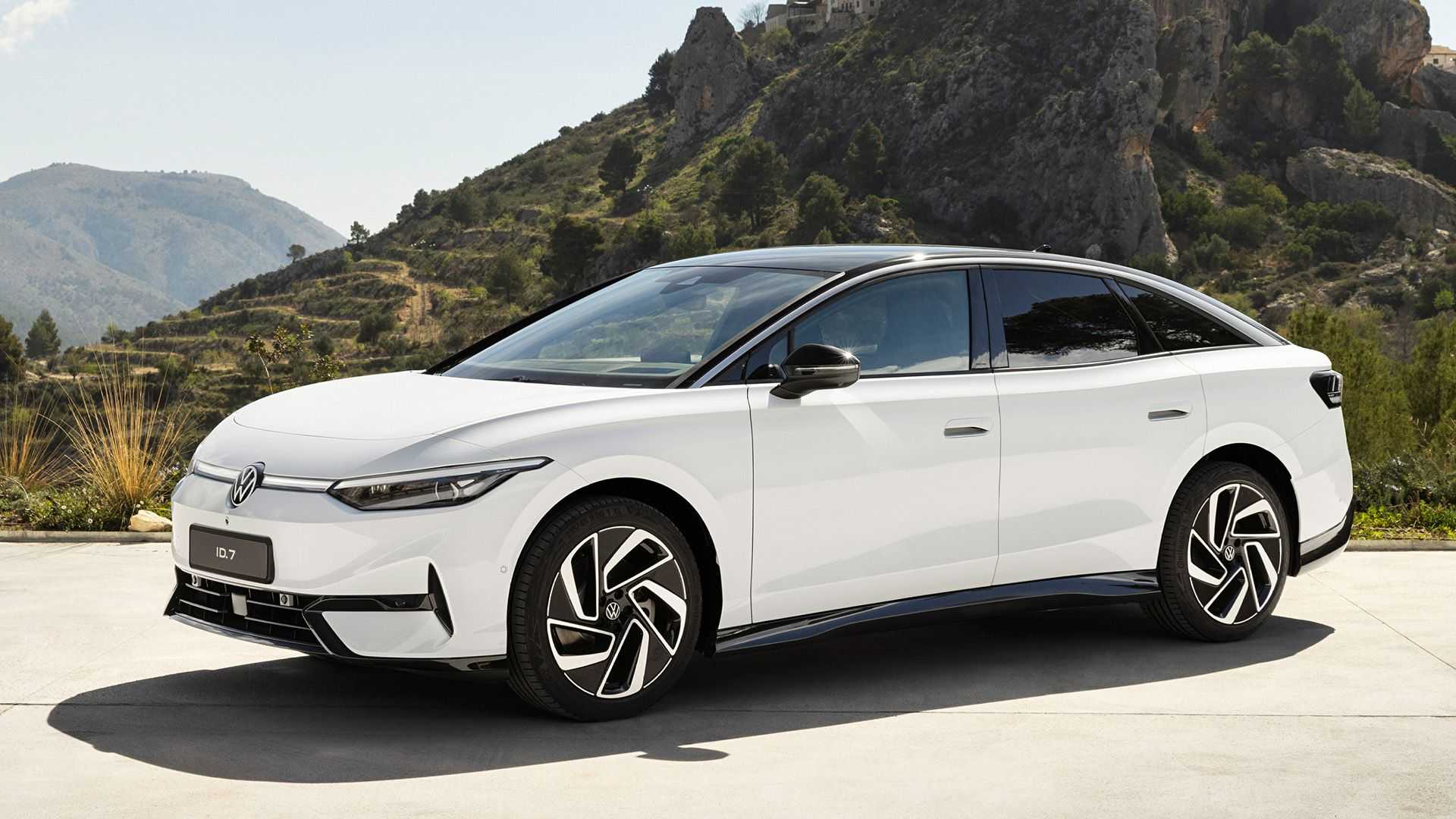
The Volkswagen ID.7 stands as the sole model on this list that had firm plans for a U.S. market entry before being withdrawn by the German automaker, citing the “ongoing challenging EV climate.” Positioned as the all-electric successor to the Passat sedan, the ID.7 offers a sophisticated long-distance travel experience. With European pricing starting from €54,505 (approximately $62,900) and an impressive WLTP range of 599 km (372 miles), it presents a compelling package for discerning buyers.
The ID.7 has been lauded for its smooth road-tripping capabilities, demonstrated by its performance on Germany’s Autobahn. Its reevaluation comes at a time when premium electric sedans are experiencing shifts, notably with the Tesla Model S exiting the market. The ID.7 could effectively fill this void, offering a refined, comfortable, and capable alternative in the full-size electric sedan segment. Furthermore, the availability of a versatile wagon version adds another layer of appeal, addressing consumer demand for practical yet luxurious European electric vehicles.
The Path Ahead: Integrating European Innovation into the American Landscape
The current state of the U.S. electric vehicle market, characterized by slowing sales and a demand for more accessible options, presents a unique opportunity for European electric vehicles. The success stories from brands like Cupra, Fiat, Renault, and Volkswagen in Europe highlight a diverse range of models that prioritize efficiency, practical design, and competitive pricing.
Introducing these models to the U.S. would involve overcoming significant market entry barriers, including regulatory homologation, establishing robust distribution networks, and building brand recognition. However, the potential rewards are substantial. By offering a broader spectrum of choice, particularly in the mid-range and compact segments, these European electric vehicles could stimulate consumer interest, accelerate EV adoption, and ultimately contribute to a more vibrant and diversified American electric vehicle market. The key to unlocking this potential lies in strategic investment and a clear understanding of American consumer demand for value-oriented, practical, and well-designed electric mobility solutions.
Frequently Asked Questions (FAQ)
Why is the U.S. electric vehicle market slowing down compared to Europe?
The U.S. market slowdown is influenced by factors such as the cancellation of the $7,500 federal tax credit, economic pressures like inflation, higher interest rates, and concerns about charging infrastructure. Additionally, the limited availability of affordable EV models in the U.S. contrasts with Europe’s more diverse and budget-friendly options.
What makes European electric vehicles potentially suitable for the American market?
Many European electric vehicles offer a combination of affordability, practical design, and varied body styles, which currently represent a gap in the U.S. market. Their focus on urban efficiency and diverse range options could appeal to American consumers looking for alternatives to existing premium or niche EV offerings.
How important is pricing for these European EVs to succeed in the U.S.?
Pricing is a critical factor for the success of European electric vehicles in the U.S. The market is currently seeking more accessible and competitively priced options. Strategic pricing, which includes consideration of potential incentives and the cost of ownership, will be essential to attract a broad base of American buyers.
What challenges do European automakers face in bringing these EVs to the U.S.?
European automakers must navigate several challenges, including compliance with U.S. safety and emission regulations (homologation), establishing robust dealership and service networks, and building brand awareness in a highly competitive market. Adapting vehicles to specific American consumer preferences and infrastructure is also vital.
Could these European electric vehicles impact the overall U.S. automotive industry?
Yes, the introduction of diverse European electric vehicles could significantly impact the U.S. automotive industry. They could stimulate competition, drive down prices, and expand the variety of EV options available to consumers. This influx of choices could accelerate the overall transition to electric mobility and broaden market appeal.