
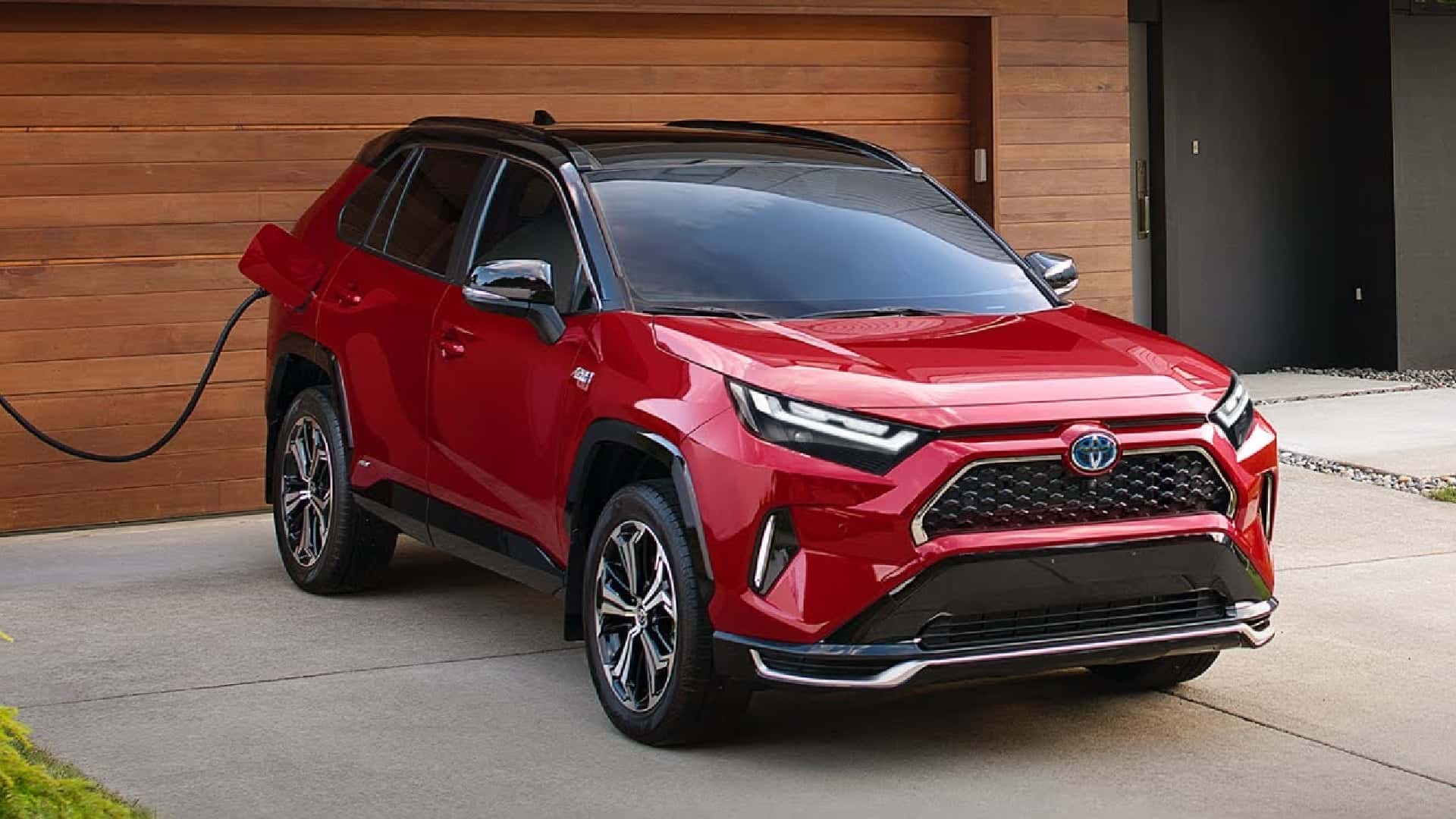
Key Takeaways: North American PHEV Charging Habits
A recent peer-reviewed study from Toyota Research Institute North America (TRINA) challenges long-held criticisms regarding Plug-in Hybrid Electric Vehicle (PHEV) utility. The research, analyzing over 6,000 PHEV owners in the U.S. and Canada, reveals significantly higher plug-in rates than previously observed in European markets. This data suggests that North American drivers are actively leveraging their vehicles’ electric capabilities, contrasting sharply with assumptions that PHEVs are rarely charged. The findings provide crucial insights into consumer behavior, the efficacy of PHEV technology, and the factors influencing adoption and usage patterns across different continents.
Dispelling the Myth: PHEVs and Charging Behaviour
For years, a pervasive narrative has shadowed the Plug-in Hybrid Electric Vehicle (PHEV) segment: that owners frequently neglect to charge their vehicles, thereby undermining their environmental and economic benefits. Critics often argued that without consistent charging, PHEVs function merely as conventional hybrids, or in some cases, less efficiently due to the added weight of an unused battery.

However, recent findings from a comprehensive, peer-reviewed study conducted by the Toyota Research Institute North America (TRINA) are now challenging this established perception, particularly within the North American market. This new data suggests a starkly different reality, indicating that the majority of PHEV owners in the United States and Canada are, in fact, diligent about their PHEV charging habits.
The Groundbreaking TRINA Study: Unveiling North American Charging Patterns
The study, spearheaded by researchers Karim Hamza and Ken Laberteaux from TRINA, delved into the charging behaviors of over 6,000 PHEV owners across the U.S. and select Canadian provinces. Unlike traditional industry practices where automakers often refrain from disclosing specific charging statistics, Toyota has emerged as an outlier by transparently sharing this critical data.
Researchers meticulously analyzed anonymized telematics data from two prominent Toyota models: the Toyota RAV4 Prime (now rebranded as the RAV4 PHEV) and the luxury Lexus NX 450h+ vehicles. The results offer a clear and compelling picture of how these plug-in hybrid electric vehicles are being utilized on a daily basis.

The analysis revealed that, on average, Toyota PHEV owners connect their vehicles to a charging source on approximately seven out of 10 driving days. This translates to an impressive 70% plug-in rate for drivers of the Toyota RAV4 PHEV. Lexus NX 450h+ owners demonstrated even higher engagement, charging their vehicles between eight and nine times per 10 driving days, equating to an 80% to 90% plug-in frequency.
Significantly, the study identified that only a small minority of the surveyed North American drivers rarely plugged in their electrified crossovers. Specifically, this group constituted just 9% of Toyota drivers and 4% of Lexus drivers within the sample, further underscoring the strong PHEV charging habits observed in the region.
A Continental Divide: North America vs. Europe
These robust North American figures present a striking contrast to data collected from European markets. Previous studies and statistics pertaining to European plug-in hybrid vehicle drivers have consistently indicated much lower rates of battery top-ups.
This notable disparity in PHEV charging habits between the two continents can be attributed to several underlying factors. In Europe, a significant portion of PHEV sales is often driven by corporate incentives. Governments in many European nations offer attractive tax breaks and other perks for companies purchasing PHEVs for their fleets.
Consequently, these company cars frequently end up in the hands of employees who may not have actively chosen a plug-in hybrid, or who might lack convenient home charging infrastructure, or even the intrinsic motivation to consistently charge the vehicle. This difference in ownership motivation and context appears to be a crucial determinant of charging frequency.
Understanding the Remaining Gap: Why Some Don’t Plug In
Despite the overall high plug-in rates in North America, the TRINA researchers are actively investigating the reasons behind the minority of drivers who infrequently charge their PHEVs. They have put forward two primary hypotheses, which echo common concerns associated with broader electric vehicle (EV) adoption.
Firstly, a lack of convenient home charging access remains a significant barrier. Not all vehicle owners have dedicated parking spaces or the ability to install home charging equipment, especially those residing in apartments or shared living arrangements. Without easy access to a personal charging station, the incentive to consistently plug in diminishes.
Secondly, the cost of electricity can, in certain scenarios, make plugging in less economically attractive than refueling with gasoline. While home charging during off-peak hours is often cost-effective, public charging stations, particularly those found at hotels or along major travel routes, can sometimes impose higher tariffs. This can lead some drivers to rely more on their internal combustion engine, especially during longer journeys, impacting their overall PHEV charging habits.
The Strategic Role of PHEVs in Sustainable Mobility
The findings from the TRINA study reinforce the strategic importance of plug-in hybrid electric vehicles as a bridge technology in the global transition towards sustainable transportation. For individuals with daily commutes shorter than their vehicle’s all-electric range and reliable access to affordable home charging, a PHEV can be an exceptionally practical and cost-effective solution.
These vehicles offer the best of both worlds: zero-emission electric driving for everyday tasks and the flexibility of a gasoline engine for extended trips without range anxiety. This versatility allows owners to significantly reduce their fuel consumption and carbon footprint without compromising on long-distance travel capabilities.
The high North American PHEV charging habits observed demonstrate that when the conditions are right – including owner motivation, accessible home charging, and favourable electricity costs – PHEVs are indeed utilized to their full potential. This effectively discredits the blanket criticism that these vehicles are inherently inefficient due to underutilization of their electric powertrains.
The automotive industry continues to innovate in the PHEV space, enhancing battery ranges, improving charging infrastructure, and making these vehicles more appealing to a broader consumer base. Understanding and addressing the factors that drive positive PHEV charging habits will be crucial for accelerating the adoption of these transitional technologies.
Looking Ahead: Implications for the Automotive Industry
This research carries significant implications for automakers, policymakers, and consumers alike. For manufacturers like Toyota, the data validates their continued investment in PHEV technology as a viable pathway to electrification. It also provides valuable insights into regional differences in consumer behaviour, which can inform future product development and marketing strategies.
Policymakers can leverage these findings to design more effective incentive programs and infrastructure development plans that genuinely encourage efficient PHEV usage. By understanding the motivations and challenges faced by drivers, governments can better tailor initiatives to support sustainable mobility goals.
For consumers, the study offers a more nuanced understanding of PHEVs, moving beyond generalized criticisms to highlight their potential for substantial fuel savings and environmental benefits when utilized correctly. As the push towards electrification continues, plug-in hybrids are proving their worth as a practical option for many drivers worldwide.
FAQ: Understanding PHEV Charging Habits
Q1: What did the Toyota study reveal about North American PHEV charging habits?
A1: The study found that North American PHEV owners demonstrate strong charging habits, with Toyota RAV4 PHEV drivers plugging in 70% of driving days and Lexus NX 450h+ owners charging 80-90% of driving days. This indicates a high utilization of their vehicles’ electric capabilities.
Q2: How do North American PHEV charging habits compare to European trends?
A2: North American PHEV owners show significantly higher charging rates compared to their European counterparts. European data often indicates lower plug-in frequencies, partly due to government incentives for company cars which may not be driven by motivated individual owners with convenient charging access.
Q3: Which Toyota and Lexus models were included in the TRINA study?
A3: The TRINA study analyzed anonymized data from Toyota RAV4 Prime (now RAV4 PHEV) and Lexus NX 450h+ vehicles. These popular plug-in hybrid models provided a robust dataset for understanding real-world charging behaviors.
Q4: What are the main reasons some PHEV owners might not charge frequently?
A4: Researchers hypothesize two main reasons: lack of convenient home charging facilities and the cost of electricity. If home charging isn’t accessible or if public charging costs exceed gasoline prices, owners may be less inclined to plug in regularly.
Q5: How does this study impact the perception of PHEVs?
A5: The study challenges the long-standing criticism that PHEVs are inefficient because owners don’t charge them. It provides empirical evidence that, in North America, most owners are actively utilizing the electric powertrain, thereby validating PHEVs as an effective solution for sustainable transportation.
Q6: What is the significance of this research for the automotive industry?
A6: This research offers crucial data for automakers to validate their PHEV strategies and understand regional consumer behavior. It helps in designing better products and marketing approaches, and informs policymakers on effective incentive and infrastructure development to support plug-in hybrid adoption.