
Key Takeaways
- Uber is taking a proactive role in expanding electric vehicle charging infrastructure, driven by its extensive trip data.
- The ride-hailing giant has committed $100 million to build new public fast-charging stations, partnering with networks like EVgo and Ionity.
- Uber’s strategy aims to support its growing fleet of electric human drivers and pave the way for future autonomous robotaxis.
- The company provides utilization guarantees to charging network partners, addressing a critical financial hurdle for infrastructure development.
- Despite a general cooling in EV sales, the public fast-charging network continues to grow, underscoring the demand for reliable charging solutions.
- Uber’s approach faces competition from vertically integrated companies like Tesla but leverages its massive scale and horizontal partnerships as a distinct advantage.
In a significant strategic pivot, ride-hailing giant Uber is now actively shaping the expansion of America’s public fast-charging network. The company, known for disrupting urban mobility, is leveraging its extensive operational data to guide the development and efficient management of electric vehicle (EV) charging stations. This initiative comes amidst a broader industry shift towards electrification, even as the growth of general EV sales experiences a noticeable cooling period.
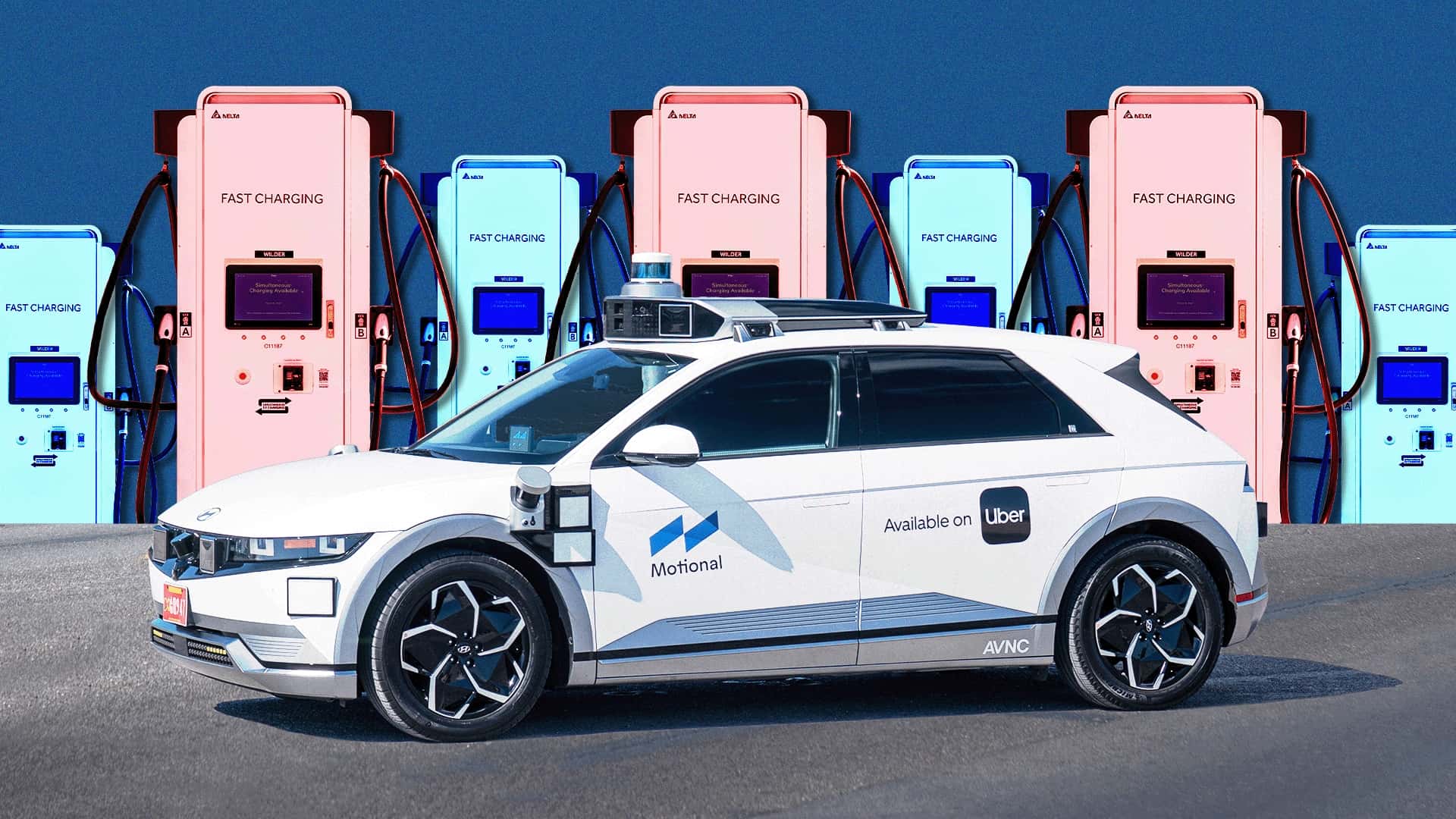
Uber’s ambition extends beyond simply facilitating rides; it aims to become a central broker in the unfolding autonomous vehicle revolution. The majority of its emerging partnerships in this domain involve modern electric vehicles, necessitating a robust and readily available charging infrastructure. Consequently, Uber is stepping up to address this critical need, not just for its anticipated wave of robotaxis but also for its rapidly expanding cohort of human drivers who are transitioning to electric cars.

Uber’s Data Advantage in EV Charging Infrastructure
At the heart of Uber’s proactive stance lies what the company describes as its ‘superpower’: an unparalleled trove of real-world trip data. Andrew Cornelia, Uber’s global head of electrification and sustainability, articulated this during an interview at the BloombergNEF Summit in New York City. He stated, “One of Uber’s superpowers is the fact that we have just so much data.”
This vast dataset provides granular insights into driver behavior, popular routes, peak demand times, and geographical areas with high traffic density. Uber is now harnessing this information to pinpoint optimal locations for new charging installations. “We’re using that data to essentially tell us where charging needs to be,” Cornelia added, highlighting a data-driven approach designed to match charging supply precisely with real-time demand.
Such an analytical capability is poised to solve one of the electric vehicle industry’s most persistent challenges: the efficient deployment of charging infrastructure. By mitigating guesswork and ensuring chargers are built where they are most needed and frequently used, Uber aims to maximize the utility and profitability of these vital facilities.
Strategic Investments and Partnerships for Electrification
In a tangible demonstration of its commitment to enhancing EV charging growth, Uber announced a significant $100 million investment in February to bolster the public fast-charging network. This capital infusion is earmarked for the construction of new stations, with strategic partnerships already forged with leading charging providers.
In the United States, Uber is collaborating with EVgo, a prominent fast-charging network. Across Europe, it has partnered with Ionity, a joint venture focused on building high-power charging stations along major highways. These collaborations are crucial for rapidly expanding the availability of reliable charging options for Uber drivers and future autonomous fleets.
Beyond direct investment, Uber is also offering a crucial incentive to its charging partners: utilization guarantees. Building fast-charging stations represents a substantial upfront capital expenditure, often running into millions of dollars per site. The financial viability of these stations hinges on consistently high utilization rates.
By guaranteeing a certain level of usage, Uber de-risks the investment for charging network operators, encouraging faster and more widespread deployment. Cornelia expressed strong confidence in this strategy, noting, “Charging now tops vehicle cost in terms of concerns for Uber drivers.” He further affirmed, “We actually have a fairly high conviction and confidence that if you build it, they will come,” underscoring the perceived demand from its driver base.
Addressing Urban Charging Challenges: The New York City Case Study
The urgency of Uber’s initiative is starkly illustrated by situations in densely populated urban centers, such as New York City. In 2023, new regulations introduced by the Taxi and Limousine Commission (TLC) incentivized rideshare drivers to switch to electric vehicles. While this policy spurred EV adoption among drivers, the accompanying charging infrastructure support lagged significantly.
The result was a severe charging shortage, leading to persistent congestion and long queues at existing stations. Tens of thousands of rideshare drivers who embraced EVs found themselves struggling to find convenient and timely charging options, impacting their ability to earn income efficiently.
To directly mitigate these immediate operational challenges, Uber has introduced a new recommendation technology integrated within its driver app. This feature provides real-time information to drivers, showcasing nearby EV chargers and identifying locations with the shortest queues. This technology aims to optimize driver time and reduce range anxiety, directly improving the experience of electric vehicle charging for its fleet.
The Broader Mobility Vision: Autonomous Vehicles and Competition
Uber’s investment in charging infrastructure is intrinsically linked to its ambitious long-term vision for autonomous vehicles. The company is actively pursuing partnerships to integrate self-driving robotaxis onto its platform, marking a significant step towards the future of urban mobility. These autonomous fleets, predominantly electric, will require an equally robust and intelligent charging ecosystem to operate efficiently at scale.
However, this expansive vision is not without its competitive pressures. Uber’s stock, as of writing, has seen a nearly 10% decline this year, reflecting investor scrutiny. Key rivals also present significant challenges. Waymo, Google’s autonomous driving subsidiary, operates as a partner with Uber in select cities like Austin and Atlanta but remains a formidable competitor in nine other markets where it runs its own ride-hailing service.
Furthermore, the looming presence of Tesla adds another layer of complexity. Elon Musk’s company is developing its own robotaxis, which are designed to charge exclusively on Tesla’s proprietary Supercharger network and serve riders through its integrated app. This vertical integration — where Tesla controls its software, hardware, and operational infrastructure — offers distinct advantages in terms of seamless user experience and operational efficiency.
In contrast, Uber’s “horizontal” approach, relying on a network of partnerships and external charging providers, gives it less direct control over every aspect of its business model. However, this strategy also enables its massive scale and global reach, which remain its own formidable advantages in the competitive mobility landscape.
A Confident Bet on Electric Vehicle Charging
While the long-term profitability and success of autonomous vehicles represent a substantial, ongoing bet for Uber, its investment in EV charging infrastructure appears to be a more immediate and less speculative venture. The transition of human drivers to electric vehicles is already a clear and accelerating trend, driven by environmental mandates, operational cost savings, and evolving consumer preferences.
The need for more ubiquitous and efficient charging solutions is therefore a present-day imperative. Charging technologies themselves are well-established and continuously improving. Newer stations boast higher power outputs, enhanced reliability, and often incorporate amenities such as convenience stores, restrooms, and Wi-Fi, making the charging experience more convenient for drivers.
Reiterating Uber’s broader commitment, Andrew Cornelia concluded, “The future of mobility is really electric, autonomous, and digitally enabled.” He emphasized the criticality of this aspect by adding, “Public charging is a concern, and that’s why we’re spending so much time on it.” Uber’s calculated move to become a central player in EV charging infrastructure deployment positions it not only to support its current operational needs but also to solidify its role in the evolving ecosystem of sustainable urban transportation.
Frequently Asked Questions (FAQ)
What is Uber’s ‘superpower’ in EV charging?
Uber’s ‘superpower’ lies in its vast repository of real-world trip data. This data allows the company to precisely identify high-demand areas and optimal locations for new charging stations, ensuring efficient deployment and maximizing utilization rates for public fast-charging infrastructure.
How much is Uber investing in EV charging?
Uber announced a significant $100 million investment in February to build new public fast-charging stations. This capital is being deployed through strategic partnerships with established charging networks like EVgo in the U.S. and Ionity in Europe.
Why is Uber making this investment now?
Uber is investing in EV charging to support its rapidly growing fleet of electric human drivers and to prepare for the widespread adoption of autonomous robotaxis on its platform. Addressing charging concerns is crucial for driver retention and the operational efficiency of future electric fleets.
What are ‘utilization guarantees’ in the context of charging stations?
Utilization guarantees are commitments from Uber to charging network partners, assuring a certain level of usage for newly built stations. This reduces the financial risk for charging providers, making it more attractive for them to invest in the expensive upfront capital required for fast-charging infrastructure.
How does Uber help its drivers find charging stations?
Uber has integrated a new recommendation technology into its driver app. This feature helps electric vehicle drivers locate nearby EV chargers and provides information on locations with the shortest queues, aiming to minimize wait times and improve charging convenience.
How does Uber’s strategy compare to Tesla’s in EV charging?
Uber adopts a ‘horizontal’ strategy, partnering with various charging networks to leverage their infrastructure. In contrast, Tesla employs a ‘vertical integration’ model, owning and operating its Supercharger network exclusively for its vehicles. Both approaches have distinct advantages and challenges in the evolving EV ecosystem.
Is Uber’s EV charging bet considered less risky than its autonomous vehicle bet?
Yes, Uber perceives its investment in EV charging as less risky. The trend of drivers transitioning to electric vehicles is already strong and accelerating, making the demand for charging infrastructure a present and proven need. The success of autonomous vehicles, while promising, still involves more long-term technological and regulatory uncertainties.