
Key Takeaways:
- Walmart, the world’s largest retailer, has dramatically accelerated the expansion of its electric vehicle (EV) fast-charging network in the United States.
- The company’s owned-and-operated DC fast charging stations increased by 50% in just two months, now boasting over 200 high-powered ports.
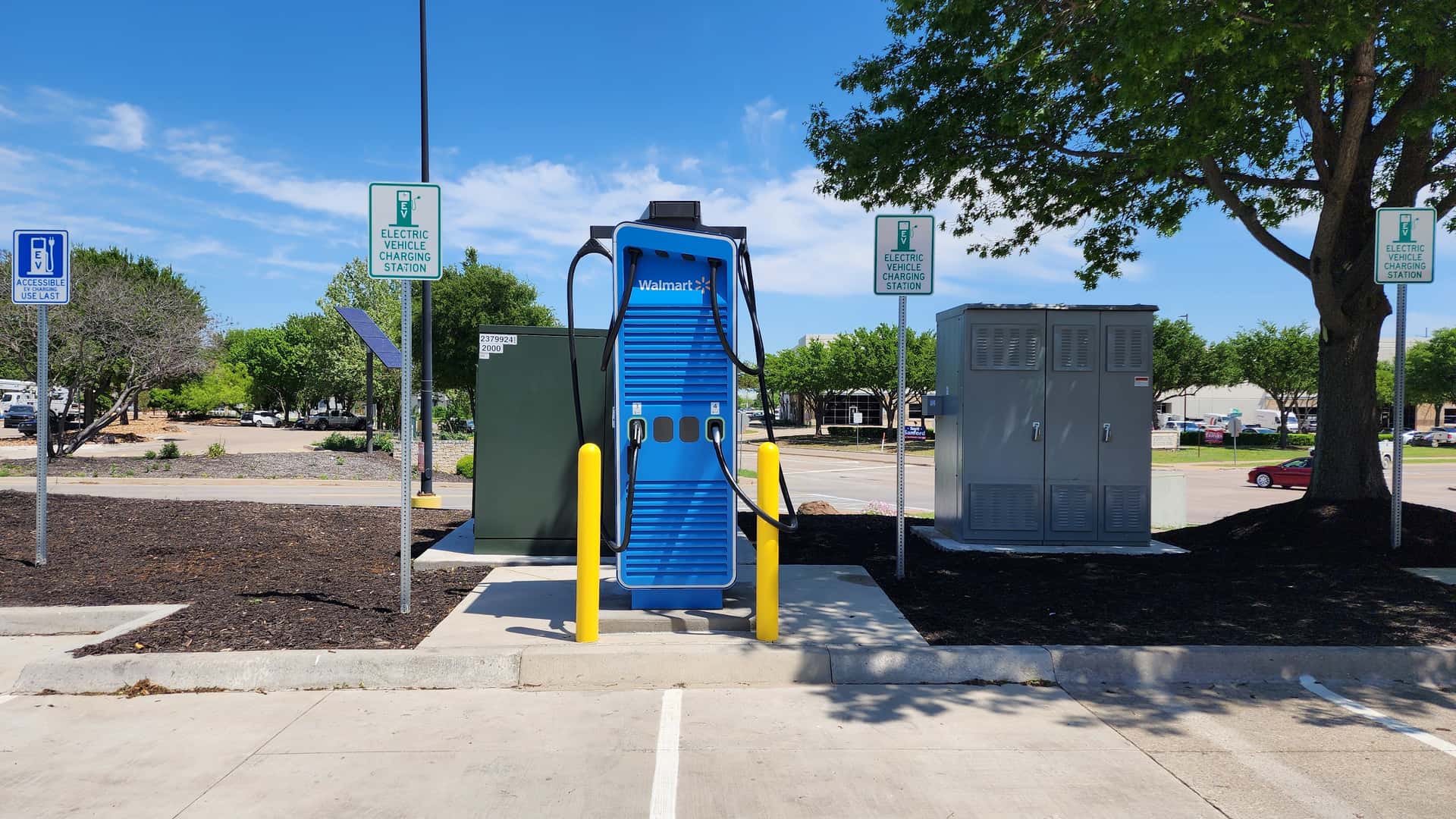
- As of early April, Walmart operates 31 DC fast charging stations with a total of 224 connectors, featuring exclusive 400-kilowatt chargers from Alpitronic or ABB.
- Each charging stall is equipped with both NACS and CCS1 ports, ensuring broad compatibility for EV drivers.
- Texas leads with 15 Walmart EV charging locations, signaling a strategic focus on high-traffic regions for this critical infrastructure.
- The retail giant aims to install fast chargers at thousands of its locations by 2030, reinforcing its commitment to sustainable transportation.
- Payment for charging is exclusively via a smartphone app, with average prices around $0.48 per kilowatt-hour.
In a significant push to bolster the nation’s electric vehicle infrastructure, retail behemoth Walmart has substantially ramped up the deployment of its own DC fast-charging network across the United States. This strategic move by the world’s largest retailer reflects a growing commitment to sustainable transportation and enhancing customer convenience.

The company has notably increased its direct current (DC) fast charging stations by an impressive 50% in merely two months. This rapid expansion positions Walmart as a key player in supporting the burgeoning demand for electric vehicle charging solutions, offering vital services to a widening base of EV drivers.
Rapid Expansion: A 50% Growth in Two Months
Walmart’s acceleration in EV charging infrastructure development has been remarkable. Recent data indicates a substantial increase in its fast-charging capabilities, moving from an earlier count to now over 200 high-powered charging ports. This swift growth underscores the retailer’s dedication to building a robust and accessible network for electric vehicle users.
According to figures from the Department of Energy’s Alternative Fuels Data Center, cited by EVChargingStations.com, Walmart currently boasts 31 dedicated DC fast-charging stations. These stations collectively offer 224 high-powered connectors, significantly expanding the options available for quick EV top-ups.

The sheer scale of Walmart’s operations and its extensive retail footprint across the U.S. provide a unique advantage in deploying charging infrastructure. By leveraging its vast network of store locations, the company is strategically integrating electric vehicle charging into everyday consumer routines, addressing a critical need for range anxiety among EV owners.
Unpacking Walmart’s Charging Technology
Walmart’s investment in its EV charging network extends to state-of-the-art technology. The company exclusively installs robust 400-kilowatt chargers, sourced from industry leaders such as Alpitronic or ABB. This focus on high-power charging ensures that drivers can rapidly replenish their vehicle’s battery, minimizing downtime during their shopping trips.
Each individual charging stall is designed for maximum compatibility, featuring both the North American Charging Standard (NACS) cable and a CCS1 (Combined Charging System) port. This dual-standard approach means that a wider array of electric vehicles, regardless of their specific charging port, can utilize Walmart’s facilities. Essentially, the network now comprises 112 individual dispensers strategically placed across various U.S. locations.
The deployment of 400-kilowatt chargers is particularly significant. Such high-power output represents a premium offering in the public charging landscape, capable of adding hundreds of miles of range in short charging sessions, often comparable to the time spent on a typical shopping errand.
A Strategic Shift in EV Charging
While Walmart has historically hosted thousands of DC fast chargers from third-party operators, including prominent networks like Electrify America, its foray into developing its own branded EV charging network marks a strategic evolution. This move began in 2023, signaling a deeper integration of electric vehicle services into the retail giant’s core business model.
The decision to build and operate its own network allows Walmart greater control over the charging experience, from pricing and maintenance to user interface and future expansion plans. It also positions the company as a direct contributor to the national EV charging infrastructure, rather than solely a host for other providers.
This dual approach – hosting third-party chargers while simultaneously building its own – maximizes accessibility for electric vehicle drivers. It creates a comprehensive ecosystem where a broad spectrum of charging options is available at Walmart locations, catering to diverse needs and preferences.
Milestones and Accelerated Growth
The initial phase of Walmart’s own EV charging network development was characterized by a measured pace. The first Walmart-branded charging locations became operational in April of the preceding year. By November of that year, the network had reached a total of 10 charging stations, demonstrating steady progress.
However, the pace of deployment has since dramatically accelerated. Three months later, by February, the network size had doubled to 20 stations. This rapid scaling continued, with the current count now standing at 31 stations. This trajectory highlights a concerted effort to scale up operations and meet ambitious deployment targets.
The transition from a gradual rollout to this accelerated expansion phase indicates a strategic shift, likely driven by increasing EV adoption rates and the growing imperative for reliable charging infrastructure. Walmart’s internal data and market analysis would undoubtedly inform such a decisive pivot.
Geographic Footprint: Where Walmart EV Chargers Are Emerging
The distribution of Walmart’s new EV charging stations reveals a concentrated effort in key regions across the United States. Texas currently leads the nation with 15 Walmart EV charging station locations. This focus on Texas underscores the state’s significant size, high vehicle ownership, and growing EV market.
Following Texas, Arizona hosts six stations, and Florida has three, indicating a strategic presence in populous states with increasing electric vehicle registrations. Oklahoma has two stations, while Alabama, Arkansas, Georgia, New Jersey, and South Carolina each feature one Walmart EV charging station.
This targeted geographic distribution suggests a phased rollout, prioritizing states with high EV penetration, significant road trip corridors, or substantial customer traffic at Walmart locations. The expansion into these areas aims to alleviate range anxiety and make electric vehicle ownership more practical for residents and travelers.
Seamless Charging Experience: App-Based Access
To access Walmart’s EV chargers, drivers are required to utilize the store’s dedicated smartphone application. This digital-first approach streamlines the payment process and integrates the charging experience into the broader Walmart ecosystem. Notably, the charging stalls are not equipped with traditional card readers, making the smartphone app the sole method for initiating and managing a charging session.
Pricing for the service varies by location, reflecting regional energy costs and market dynamics. However, the average price observed is approximately $0.48 per kilowatt-hour. This pricing strategy aims to offer competitive rates while covering operational costs for the high-powered DC fast chargers. The app-based system also allows for potential loyalty programs, personalized offers, and real-time availability updates for charging stations, enhancing the overall user experience.
Beyond 2030: Walmart’s Long-Term Vision for EV Infrastructure
Walmart has remained relatively discreet regarding the specific details of its proprietary EV charging network development. However, the company made a significant declaration last year, outlining its ambitious plans to install fast chargers at “thousands of its locations by 2030.” This aggressive target underscores a long-term commitment to becoming a major facilitator of electric vehicle adoption.
The vision extends even further, with Walmart indicating that “even more coming in the next decade.” This suggests a multi-phase, sustained investment in EV infrastructure that will continue to evolve alongside market demands and technological advancements. The sheer scale of this commitment—thousands of locations—would transform Walmart stores into ubiquitous charging hubs across the country, making them indispensable stops for EV drivers.
Such a comprehensive rollout would not only benefit individual electric vehicle owners but also contribute significantly to national goals for decarbonization and energy independence. Walmart’s deep understanding of logistics and supply chain management positions it uniquely to execute such a large-scale infrastructure project efficiently.
Impact on the Broader EV Landscape
Walmart’s significant investment and rapid expansion in the DC fast charging network are poised to have a substantial impact on the broader electric vehicle landscape. As a trusted brand with a vast customer base, its commitment to EV infrastructure legitimizes and normalizes electric vehicle usage for millions of Americans who regularly visit its stores.
The presence of reliable, high-speed charging options at Walmart locations can help alleviate ‘range anxiety,’ a key barrier to EV adoption for many consumers. By providing convenient charging opportunities where people already shop, Walmart is integrating electric vehicle ownership seamlessly into daily life. This move could also spur other major retailers to accelerate their own EV charging initiatives, fostering a competitive environment that ultimately benefits consumers through increased access and improved services.
Furthermore, the decision to install 400-kilowatt chargers and support both NACS and CCS1 standards demonstrates a forward-thinking approach that future-proofs the network against evolving charging technologies and standards. This strategic foresight ensures that Walmart’s infrastructure remains relevant and effective for a diverse and growing fleet of electric vehicles for years to come.
Frequently Asked Questions (FAQ)
What types of chargers does Walmart install at its EV charging stations?
Walmart exclusively installs high-powered 400-kilowatt DC fast chargers from reputable manufacturers like Alpitronic or ABB. These chargers are designed to provide rapid energy replenishment for electric vehicles, significantly reducing charging times for drivers.
Which charging connectors are available at Walmart’s EV stations?
Each charging stall at Walmart’s owned-and-operated stations is equipped with both a NACS (North American Charging Standard) cable and a CCS1 (Combined Charging System) port. This dual compatibility ensures that a wide range of electric vehicles can utilize the network.
How many Walmart EV charging stations are currently operational?
As of early April, Walmart operates 31 DC fast charging stations across the United States. These stations collectively offer a total of 224 high-powered connectors, demonstrating a rapid expansion in recent months.
Which state has the most Walmart EV charging stations?
The state of Texas currently leads in the number of Walmart EV charging stations, with 15 locations. Other states with significant presence include Arizona (6), Florida (3), and Oklahoma (2), reflecting a strategic geographic deployment.
How do I pay for charging my EV at a Walmart station?
To use Walmart’s EV chargers, drivers must utilize the store’s dedicated smartphone application. The charging stalls do not feature card readers, making the app the exclusive method for initiating and managing charging sessions and payments.
What is the average price for charging at Walmart’s EV stations?
While pricing can vary by location due to regional energy costs, the average price for charging at Walmart’s EV stations is approximately $0.48 per kilowatt-hour. Drivers should confirm specific rates via the smartphone app before charging.
What are Walmart’s long-term plans for its EV charging network?
Walmart has stated its ambitious goal to install fast chargers at thousands of its locations across the U.S. by 2030, with plans for even further expansion in the decade beyond. This signifies a major, sustained investment in electric vehicle infrastructure.