
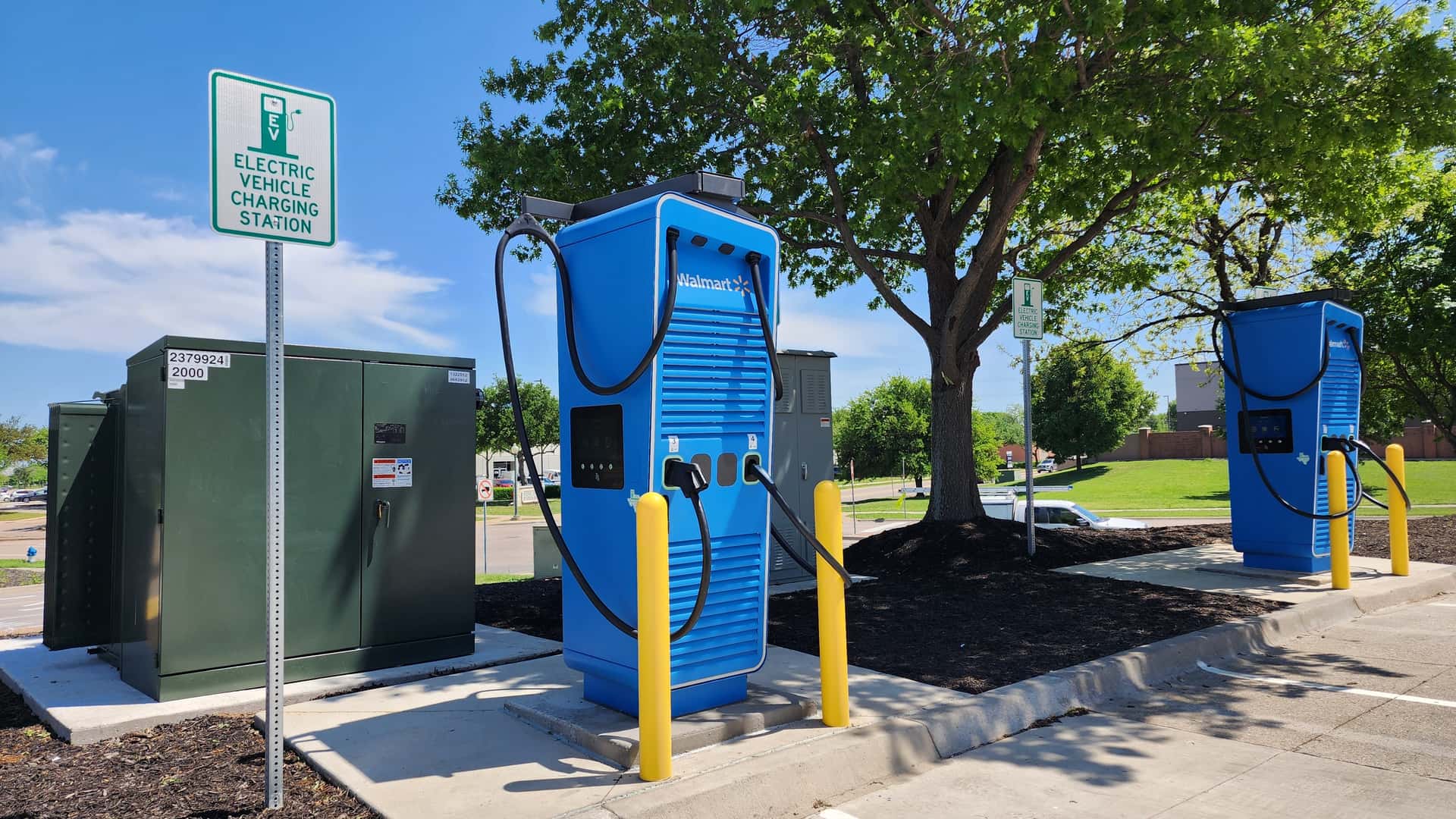
Walmart, the world’s largest retailer, is making significant strides in the expansion and refinement of its electric vehicle (EV) charging infrastructure across the United States. The company’s latest efforts indicate a strong commitment to enhancing convenience and accessibility for EV drivers, marked by a rapid increase in charging capacity and the introduction of more flexible payment methods.
This strategic push is not merely about increasing numbers; it reflects a broader industry trend towards a more robust and user-friendly public charging ecosystem. With a substantial retail footprint across the nation, Walmart’s investment in EV charging stations is poised to play a crucial role in supporting the growing adoption of electric vehicles.

Key Takeaways:
- Walmart’s EV charging network has seen remarkable growth, with a 50% increase in capacity within a single month.
- The network now boasts over 300 DC fast charging ports at 50 locations, with plans for thousands more.
- Contactless payment options are being rolled out, addressing customer feedback and simplifying the charging process.
- Walmart+ members receive a 10% discount on charging sessions initiated via the app.
- The retail giant is exclusively installing high-powered 400 kW chargers with both CCS1 and NACS connectors, improving compatibility for a wide range of EVs.
- Pricing remains transparent, with no idling fees and clear displays for customers, though Time of Use (TOU) rates apply at some locations.
Walmart’s Aggressive Push into EV Charging
In a powerful demonstration of its commitment to electric mobility, Walmart has significantly ramped up the deployment of DC fast chargers at its retail locations across the United States. The pace of this expansion underscores the company’s intent to become a major player in the national EV charging landscape.
Rapid Expansion: A 50% Jump in a Month
The latest data reveals a substantial acceleration in the growth of the Walmart EV charging network. The company successfully increased the size of its network by approximately 50% in just one month. This surge follows another 50% increase recorded between February and April, indicating a sustained and aggressive deployment strategy.
Presently, the Walmart EV charging network features more than 300 individual ports capable of delivering up to 400 kilowatts of power. These high-capacity chargers are distributed across 50 Walmart stores in the U.S. This marks a notable rise from the previous month’s count of 31 stations and 224 high-powered connectors, highlighting the rapid scaling of operations.
Such rapid expansion is critical for addressing range anxiety, a significant concern for potential EV buyers. By integrating charging infrastructure into easily accessible retail locations, Walmart is directly contributing to the convenience and feasibility of owning an electric vehicle for millions of Americans.
Elevating the Charging Experience with Payment Innovations
Beyond sheer numbers, Walmart is also focusing on refining the user experience at its EV charging stations. A key improvement on the horizon is the introduction of contactless payment terminals, a direct response to valuable customer feedback.
Adam Happel, Walmart’s General Manager for Retail EV charging, confirmed this development during an interview with InsideEVs contributor and charging expert Tom Moulougney. Previously, stations could only be operated and paid for via the dedicated Walmart app, which posed an inconvenience for some drivers who prefer not to manage multiple smartphone applications for charging.
The addition of contactless payment options will streamline the charging process, making it more intuitive and accessible for a wider array of EV users. A pilot program for this payment solution is currently underway at one station, with plans to integrate the functionality into all future installations.
Transparent Pricing and Membership Benefits
Walmart’s approach to pricing within its EV charging network emphasizes transparency and value for its customers. Happel confirmed that the company does not implement idling fees, a common practice at many charging stations designed to prevent vehicles from occupying chargers unnecessarily after reaching a full charge.
Customers can expect a clear view of their charging costs, eliminating hidden charges and fostering trust. While there is no dynamic pricing based on station crowdedness, some locations do incorporate Time of Use (TOU) rates. This means the price of electricity may vary depending on the time of day, reflecting peak and off-peak demand periods for the power grid.
An additional benefit is extended to Walmart+ members. Those who initiate and pay for their charging sessions through the dedicated Walmart app are eligible for a 10% discount. This incentive not only encourages app usage but also adds significant value for loyal customers, making the Walmart EV charging network an even more attractive option.
Addressing Future Technologies: Plug & Charge and Connector Standards
While the focus is on immediate improvements, Walmart is also considering advanced charging technologies. Plug & Charge, a feature that allows EV drivers to simply plug in their vehicle to start a session without needing an app or credit card, is currently not supported but is under evaluation.
The primary hurdles to implementing Plug & Charge involve the communication protocols between the charger and the vehicle, as well as the mechanism for applying discounts. As the system bypasses manual interaction, automatic application of membership-based discounts becomes more complex. The company aims to balance technological convenience with its customer benefit programs.
Strategic Partnerships and Technical Specifications
The Walmart EV charging network relies on robust hardware, exclusively installing 400 kW DC fast chargers sourced from industry leaders ABB or Alpitronic. These high-power units are equipped with both CCS1 and NACS (North American Charging Standard) connectors, ensuring compatibility with a broad spectrum of electric vehicles on the market today and in the near future.
An important operational adjustment has also been made regarding the NACS cable placement. Initially, these cables were fitted to the right side of the charger. However, recognizing that most Tesla EVs, which predominantly use the NACS port, have their charging inlet on the left rear, Walmart has decided to standardize NACS cable placement to the left. This minor but crucial design change enhances user convenience, particularly for Tesla owners and other vehicles adopting the NACS standard.
The Long-Term Vision for Electric Mobility
Walmart’s commitment to the EV charging sector is firmly positioned for the long term. Adam Happel emphasized that the retail giant views this initiative as a sustained effort, not a short-term venture. The company anticipates deploying thousands of chargers across as many Walmart and Sam’s Club locations as feasible throughout the U.S.
With over 5,200 stores operating stateside, the potential for expansion is immense. This vast network presents an unparalleled opportunity to integrate critical EV infrastructure into the daily lives of millions of consumers, making electric vehicle ownership more practical and seamless.
Impact on National EV Infrastructure and Consumer Adoption
The scale of Walmart’s ambition for its EV charging network holds significant implications for the national electric vehicle infrastructure. By leveraging its extensive network of stores, many of which are strategically located along major travel routes and in suburban and rural communities, Walmart can fill crucial charging gaps.
This widespread availability of reliable and user-friendly DC fast chargers at familiar retail destinations will undoubtedly reduce psychological barriers to EV adoption, such as range anxiety. It also positions Walmart as a leader among retailers in supporting sustainable transportation solutions, contributing to broader environmental goals while enhancing the customer experience.
FAQ Section
What is the current size of Walmart’s EV charging network?
Walmart’s EV charging network currently features over 300 individual DC fast charging ports across 50 Walmart stores in the United States. This represents a significant expansion, including a 50% increase in capacity within the last month alone, building on previous growth earlier this year.
How can EV drivers pay for charging at Walmart stations?
Initially, payment was exclusively through the Walmart app. However, in response to customer feedback, Walmart is introducing contactless payment terminals. A pilot is underway, and future installations will include this convenience, allowing drivers more flexibility in how they pay for their charging sessions.
Are there any discounts for using Walmart’s EV chargers?
Yes, Walmart+ members who initiate and pay for their charging sessions using the dedicated Walmart app are eligible to receive a 10% discount. This provides a valuable incentive for membership and encourages app usage for a streamlined charging experience.
Does Walmart charge idling fees at its EV stations?
No, Walmart does not implement idling fees at its EV charging stations. The company maintains a policy of transparent pricing, ensuring customers have a clear understanding of their costs without additional penalties for occupying a charging spot after their vehicle is fully charged.
What type of chargers is Walmart installing?
Walmart is exclusively installing high-powered 400 kW DC fast chargers, sourced from reputable manufacturers like ABB or Alpitronic. These chargers are equipped with both CCS1 and NACS (North American Charging Standard) connectors to ensure maximum compatibility with the diverse range of electric vehicles on the road.
Are there plans for more Walmart EV charging locations?
Yes, Walmart has a long-term vision for its EV charging network. The company plans to deploy thousands more chargers across as many Walmart and Sam’s Club locations as possible throughout the U.S., leveraging its extensive footprint of over 5,200 stores nationwide.