
Key Takeaways:
- A recent peer-reviewed study by Toyota Research Institute North America (TRINA) reveals high rates of plug-in activity among North American Plug-in Hybrid Electric Vehicle (PHEV) owners.
- Contrary to previous European data, the study found that U.S. and Canadian PHEV owners frequently charge their vehicles, leveraging their electric powertrains.
- Toyota RAV4 PHEV drivers plug in, on average, 70% of driving days, while Lexus NX 450h+ owners report an even higher rate of 80% to 90%.
- The findings present a stark contrast to European trends, where incentives for company cars may lead to lower charging engagement among PHEV users.
- Researchers continue to investigate factors, such as charging accessibility and electricity costs, that might influence the small percentage of infrequent chargers.
Long-standing criticisms suggesting that Plug-in Hybrid Electric Vehicles (PHEVs) fall short of their environmental and efficiency promises due to infrequent charging have been widely discussed. However, new research emerging from North America presents a compelling counter-narrative, directly challenging these long-held assumptions about Plug-in Hybrid Vehicle Usage.

A recent peer-reviewed study conducted by Karim Hamza and Ken Laberteaux from the Toyota Research Institute North America (TRINA) offers significant insights into the real-world charging behaviors of PHEV owners across the United States and select Canadian provinces. Their comprehensive analysis, involving anonymized data from over 6,000 Toyota and Lexus PHEV owners, indicates a strong inclination among these drivers to regularly utilize their vehicles’ electric driving capabilities.
Debunking the Myth: North American PHEV Charging Habits
The study’s findings directly address the core of the criticism: that PHEV owners do not consistently plug in their vehicles, thus relying more heavily on the internal combustion engine and negating the environmental benefits of the hybrid technology. The TRINA research paints a different picture for the North American market, showcasing a high degree of owner engagement with the charging infrastructure.
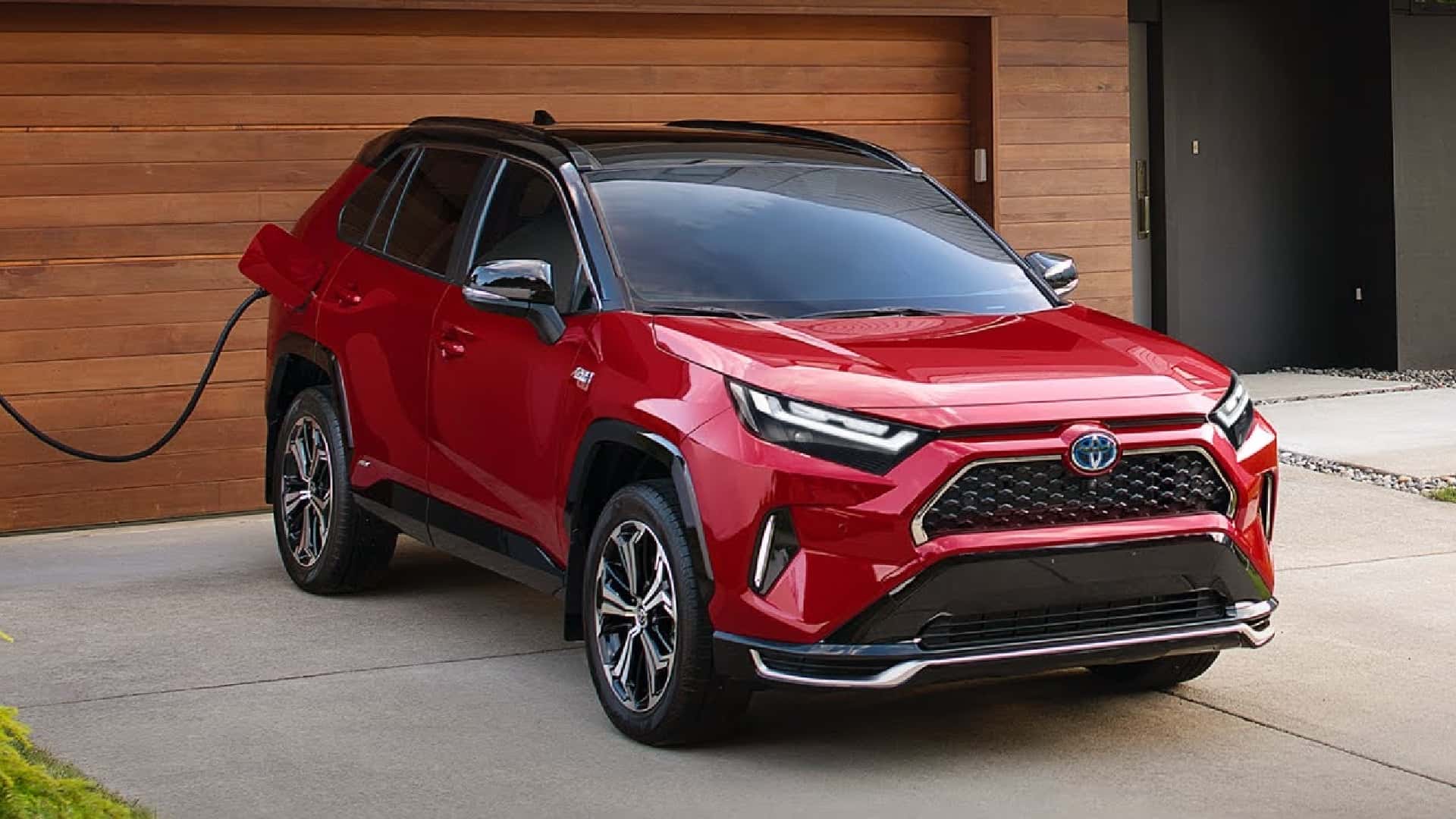
Specifically, the data revealed that Toyota RAV4 Prime (now rebranded as RAV4 PHEV) owners demonstrated a robust charging routine, plugging in their vehicles on seven out of 10 driving days, translating to a 70% charging frequency. This figure is notably high, illustrating a significant commitment to maximizing the electric range of their vehicles.

Lexus NX 450h+ owners exhibited an even higher rate of Plug-in Hybrid Vehicle Usage, consistently charging their electrified crossovers between eight and nine times per 10 driving days. This impressive 80% to 90% charging frequency underscores a strong user adoption of the full capabilities offered by these premium plug-in hybrid models.
Crucially, the study also identified a minimal segment of drivers who rarely engage in charging. Only 9% of Toyota PHEV drivers and an even smaller 4% of Lexus PHEV owners within the sample fell into this category. These low percentages suggest that for the vast majority of North American PHEV owners, regularly topping up their vehicle’s battery is an integral part of their driving routine.
The European-North American Divide in PHEV Adoption
The high rates of Plug-in Hybrid Vehicle Usage observed in North America stand in stark contrast to previously documented trends in Europe. Multiple studies and statistical analyses from the European market have historically indicated that European plug-in hybrid drivers tend to charge their vehicles less frequently, often underutilizing the electric component of their powertrains.
This disparity can largely be attributed to differing market dynamics and incentive structures. In several European countries, governmental incentives for companies purchasing PHEVs have led to these vehicles being widely adopted as company cars. Consequently, these vehicles often end up in the hands of employees who may not have a personal preference for a plug-in hybrid, or may lack convenient access to charging infrastructure at home or work, or even the direct motivation to charge due to fuel cards covering gasoline costs.
The North American context appears to be driven by more consumer-centric purchasing decisions, where individuals actively choose PHEVs, presumably with the intention and capability to charge them regularly. This suggests that when the choice is personal and supported by practical charging options, Plug-in Hybrid Vehicle Usage dramatically increases.
Understanding Infrequent Charging: TRINA’s Hypotheses
Despite the overwhelmingly positive charging statistics, the TRINA researchers are committed to understanding the factors influencing the small percentage of North American PHEV drivers who infrequently plug in. They have put forward two primary hypotheses, which resonate with common concerns often raised about broader electric vehicle (EV) adoption.
The first hypothesis centers on the issue of convenient home charging. For many vehicle owners, access to a dedicated home charging station, or even a standard electrical outlet in a private garage or driveway, can significantly impact their ability and willingness to charge regularly. Those without such amenities might find public charging options less convenient or more expensive, thus reducing their Plug-in Hybrid Vehicle Usage.
The second hypothesis pertains to the cost of electricity. While home charging is often more economical than purchasing gasoline, the price of electricity can vary significantly based on utility rates, time-of-use tariffs, and public charging station fees. In scenarios where electricity costs are high, some PHEV drivers might perceive it as more cost-effective to rely on gasoline, particularly for longer journeys or in regions with competitive fuel prices. This economic consideration plays a vital role in driver behavior.
The Evolving Role of Plug-in Hybrid Vehicles in Sustainable Mobility
Plug-in hybrid vehicles are often positioned as a crucial bridging technology in the transition towards fully electric mobility. They offer the flexibility of electric-only driving for daily commutes, coupled with the extended range and convenience of a gasoline engine for longer trips, mitigating range anxiety often associated with Battery Electric Vehicles (BEVs).
Optimal Plug-in Hybrid Vehicle Usage, characterized by consistent charging and maximized electric driving, is essential for these vehicles to deliver their full environmental benefits, including reduced tailpipe emissions and lower fuel consumption. The TRINA study provides encouraging evidence that, at least in North America, a significant portion of PHEV owners are actively contributing to these sustainability goals.
This research offers valuable insights for automakers and policymakers alike. Understanding genuine Plug-in Hybrid Vehicle Usage patterns can inform future vehicle design, charging infrastructure development, and incentive programs. It underscores the importance of considering regional differences in consumer behavior and market structures when evaluating the efficacy of various electrified vehicle technologies.
Implications for the Automotive Industry and Consumers
The findings from Toyota Research Institute North America carry significant implications for the broader automotive industry. As manufacturers continue to diversify their electrified portfolios, understanding real-world Plug-in Hybrid Vehicle Usage is paramount. The study suggests that with the right market conditions and consumer motivations, PHEVs can indeed operate predominantly on electric power, fulfilling their intended purpose.
For consumers, the study reaffirms that a PHEV can be a highly efficient and cost-effective personal transportation solution, particularly for those who can reliably charge at home and whose daily driving needs fall within the vehicle’s all-electric range. It reinforces the idea that these vehicles offer a compelling balance between environmental responsibility and practical utility.
The ongoing research into the motivations of the minority of infrequent chargers will also be crucial. Addressing barriers such as lack of convenient charging access or perceived high electricity costs could further enhance overall Plug-in Hybrid Vehicle Usage and cement their role in the global shift towards more sustainable transportation.
Conclusion
The latest peer-reviewed study from Toyota Research Institute North America provides a robust data-driven rebuttal to the narrative that Plug-in Hybrid Electric Vehicles are not effectively utilized. By demonstrating high rates of consistent charging among U.S. and Canadian owners of Toyota and Lexus PHEVs, the research highlights a significant regional difference in Plug-in Hybrid Vehicle Usage compared to Europe.
This authoritative analysis reaffirms the potential of PHEVs as an effective solution for reducing emissions and fuel consumption when paired with conscientious owner behavior and supportive infrastructure. It underscores the importance of nuanced understanding of automotive market dynamics and consumer choices in the ongoing evolution of sustainable mobility.
Frequently Asked Questions (FAQs)
What is a Plug-in Hybrid Electric Vehicle (PHEV)?
A PHEV combines a gasoline engine with an electric motor and a larger battery that can be charged by plugging into an external power source. It can run on electricity for a significant range, switch to gasoline, or use both.
What did the Toyota Research Institute North America (TRINA) study investigate?
The TRINA study analyzed anonymized charging data from over 6,000 Toyota RAV4 Prime and Lexus NX 450h+ owners in the U.S. and Canada to understand their real-world Plug-in Hybrid Vehicle Usage and charging habits.
How often do North American PHEV owners plug in their vehicles, according to the study?
The study found that Toyota RAV4 PHEV owners plug in 70% of driving days, while Lexus NX 450h+ owners charge between 80% and 90% of driving days, indicating high Plug-in Hybrid Vehicle Usage.
Why is there a difference in PHEV charging habits between North America and Europe?
The study suggests that European trends of lower charging frequency may be influenced by government incentives for company cars, leading to ownership by those without personal motivation or convenient charging access, unlike North American consumers.
What are the primary reasons some PHEV drivers might not plug in frequently?
TRINA researchers hypothesize that infrequent charging among a minority of drivers may stem from a lack of convenient home charging options or situations where the cost of electricity is perceived to be higher than fueling with gasoline.
What does this study imply for the future of PHEVs?
The study reinforces the potential of PHEVs as effective transitional vehicles towards full electrification, particularly when consumers actively choose them and have access to consistent charging, thereby maximizing their environmental and efficiency benefits.
Is this study peer-reviewed?
Yes, the findings presented by Karim Hamza and Ken Laberteaux from Toyota Research Institute North America were published as a peer-reviewed study, adding to its credibility and scientific rigor.