
Key Takeaways (TL;DR)
- A new peer-reviewed study from Toyota Research Institute North America (TRINA) challenges the long-held criticism that plug-in hybrid electric vehicle (PHEV) owners rarely charge their cars.
- The comprehensive analysis of over 6,000 PHEV owners in the U.S. and Canada reveals that a significant majority regularly plug in their vehicles.
- Toyota RAV4 PHEV owners reported charging on 70% of driving days, while Lexus NX 450h+ owners showed an even higher rate of 80-90%.
- These North American charging patterns stand in stark contrast to previous data from Europe, where lower charging rates among PHEV owners have been observed, often attributed to specific market dynamics and incentive structures.
- The findings underscore the potential for plug-in hybrid vehicles to deliver substantial fuel savings and environmental benefits when utilized as intended, particularly for individuals with convenient home charging access and shorter daily commutes.
For years, a pervasive narrative has cast a shadow over plug-in hybrid electric vehicles (PHEVs), suggesting that their environmental and economic benefits are often undermined by owners who fail to consistently plug them in. This skepticism has fueled a debate in the automotive industry, raising questions about the true efficacy of these transitional vehicles.
However, recent robust data emerging from North America is poised to recalibrate this conversation. A new, peer-reviewed study offers compelling evidence that challenges the prevailing assumption, revealing that American and Canadian PHEV owners are, in fact, highly diligent about charging their vehicles, maximizing their electric driving potential.

Groundbreaking Study Reimagines PHEV Owners’ Habits
The pivotal research, published by Karim Hamza and Ken Laberteaux from Toyota Research Institute North America (TRINA), meticulously analyzed the charging behaviors of over 6,000 PHEV owners across the United States and Canada. This extensive dataset provides an unprecedented look into real-world usage patterns, offering a clear and authoritative counter-narrative to previous criticisms.
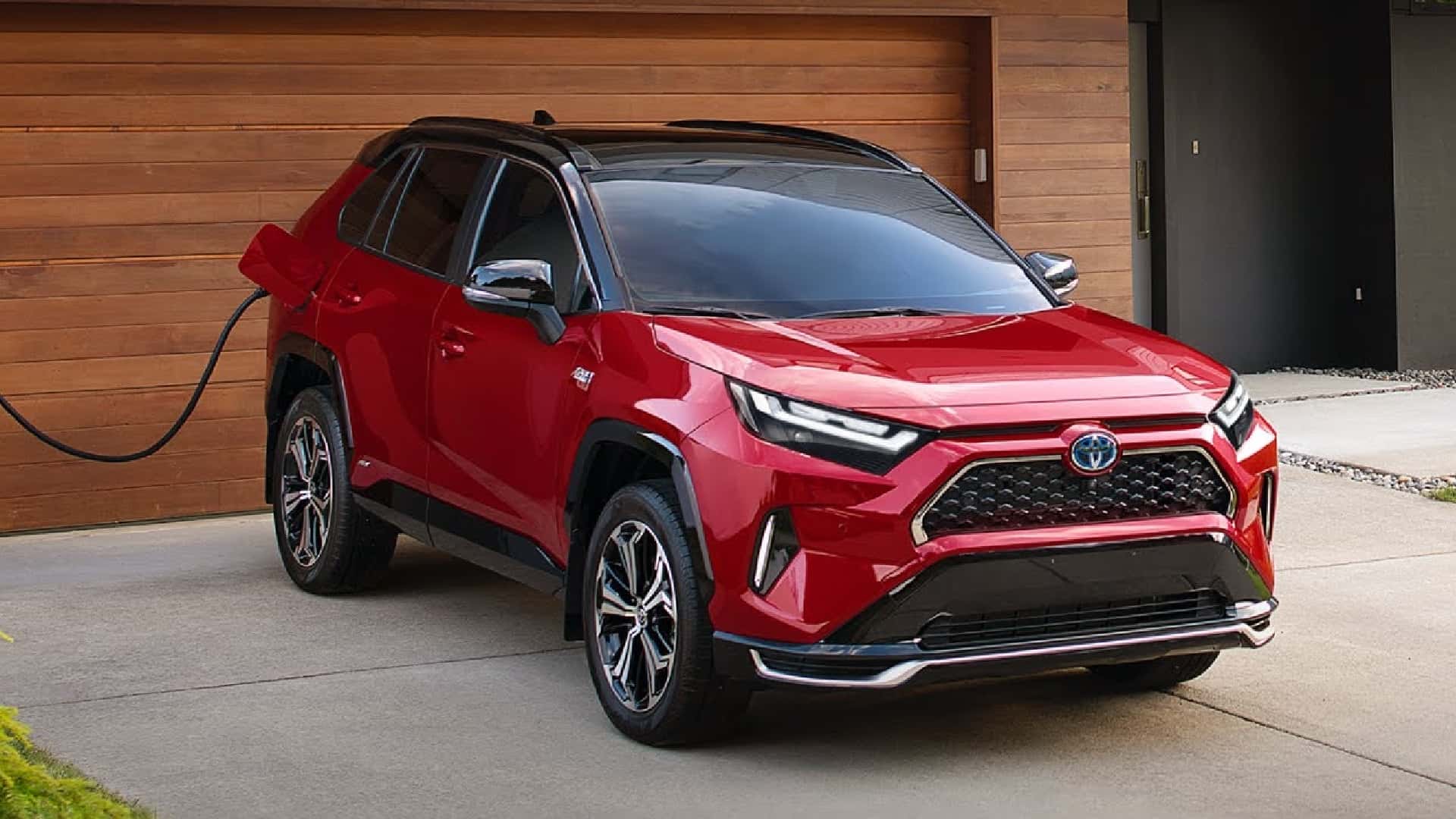
Automakers have traditionally been reticent to disclose specific charging statistics for their plug-in hybrid fleets. Yet, Toyota has emerged as a notable exception, allowing its research institute to delve into this crucial area. The study focused on anonymized data derived from popular models: the Toyota RAV4 Prime (now known as the RAV4 PHEV) and the luxurious Lexus NX 450h+.
The findings from this comprehensive analysis are unequivocal. The data definitively demonstrates that a vast majority of North American PHEV owners are actively leveraging their vehicles’ electric powertrains, integrating regular charging into their daily routines. This commitment to charging plays a critical role in realizing the full benefits of plug-in hybrid technology.

North American PHEV Owners Show Strong Charging Discipline
The TRINA study illuminates a striking dedication among North American PHEV owners to maintain their vehicles’ electric charge. On average, Toyota PHEV owners were found to plug in their cars on seven out of every ten driving days, translating to an impressive 70% charging frequency. This consistent effort ensures that a significant portion of their daily mileage is covered using electricity.
The commitment among Lexus PHEV owners was even more pronounced, with reported charging frequencies ranging between eight and nine times per ten driving days, or 80% to 90%. These high percentages underscore a strong inclination among these drivers to prioritize electric propulsion for their commutes and shorter trips, reserving gasoline for longer journeys.
Crucially, the percentage of PHEV owners within this sample who rarely engaged in charging was remarkably low. Only 9% of Toyota drivers and an even smaller 4% of Lexus drivers from the North American cohort were identified as infrequent chargers. These figures significantly undermine the widespread belief that most PHEV owners neglect to plug in their electrified crossovers.
The European Contrast: Different Markets, Different Behaviors
The North American charging success story presents a stark contrast to patterns observed among European plug-in hybrid vehicle drivers. Multiple studies and statistical analyses from Europe have frequently indicated that PHEV owners there tend to charge their vehicles less often, leading to lower utilization of their electric range.
Understanding this disparity requires examining the different market dynamics at play. A significant contributing factor in Europe is the prevalence of government incentives tailored for companies acquiring PHEVs as fleet vehicles. Consequently, these company cars often end up in the hands of employees who may not have chosen a plug-in hybrid personally.
These drivers might lack a personal affinity for electrified motoring, convenient access to charging infrastructure at home or work, or sufficient motivation to consistently charge their vehicles. Such structural and motivational differences highlight that driver behavior is not uniform across all markets and is heavily influenced by policy frameworks and individual circumstances.
Addressing the Challenges for Infrequent Chargers
While the study reveals overwhelmingly positive charging habits among North American PHEV owners, the researchers at TRINA are still keen to understand the factors influencing the small percentage of drivers who rarely plug in. Their current hypotheses echo common concerns associated with broader electric vehicle adoption.
One primary theory suggests that some PHEV owners may lack convenient home charging solutions. Installing a dedicated charging station can be an obstacle for residents in apartments, those without private garages, or individuals with limited electrical capacity at their residences. Without easy access to overnight charging, the incentive to plug in diminishes significantly.
Another crucial hypothesis revolves around the cost of electricity. In certain regions, or at particular public charging stations, the expense of recharging a PHEV battery can occasionally exceed the cost of purchasing gasoline. This economic calculation can deter some PHEV owners from relying on electric power, especially during road trips or when away from home charging.
PHEVs: A Strategic Solution in the Electrification Transition
The insights from the TRINA study reinforce the notion that plug-in hybrid vehicles offer a highly effective and practical solution for a diverse segment of the driving population. When utilized optimally, PHEVs can deliver substantial environmental and financial benefits, bridging the gap between conventional internal combustion engine (ICE) vehicles and fully electric vehicles (EVs).
For individuals who can readily charge at home at an affordable rate, and whose daily commute falls within the vehicle’s all-electric range, a PHEV represents an exceptionally smart choice. The ability to commute emission-free on electricity for most days, coupled with the flexibility of a gasoline engine for longer journeys without range anxiety, makes PHEVs particularly appealing.
This dual-powertrain advantage allows PHEV owners to significantly reduce their carbon footprint and achieve considerable savings on fuel costs. The flexibility offered by these vehicles makes them an ideal solution for those transitioning to electric mobility, providing a stepping stone towards a more sustainable transportation future without compromising convenience or long-distance travel capabilities.
The Evolving Landscape of Vehicle Electrification
The findings from the Toyota Research Institute North America carry significant implications for the broader automotive industry and the global push towards electrification. By debunking the myth of the uncharged PHEV, the study solidifies the role of plug-in hybrids as viable and effective components of a diversified clean energy vehicle strategy.
For policymakers, these results can inform future incentive programs and infrastructure development, ensuring that support is tailored to maximize the benefits of different electrified vehicle types. For automakers, understanding real-world usage patterns allows for better product development, marketing, and consumer education, fostering greater confidence in PHEV technology.
As the automotive sector continues its transformative shift towards sustainable mobility, accurately assessing consumer behavior and vehicle performance is paramount. The diligence of North American PHEV owners, as demonstrated by this study, confirms that plug-in hybrid vehicles are a powerful tool in reducing emissions and fostering fuel efficiency when supported by informed consumers and accessible charging solutions.
FAQ Section
Q1: What was the main finding of the new TRINA study on PHEVs?
A: The study revealed that American and Canadian plug-in hybrid electric vehicle (PHEV) owners exhibit strong charging habits, with Toyota owners plugging in 70% of driving days and Lexus owners 80-90% of the time, directly challenging the notion that PHEVs are rarely charged.
Q2: How did North American PHEV charging habits compare to those in Europe?
A: North American PHEV owners showed significantly higher charging rates than their European counterparts. European studies have often indicated lower charging frequencies, attributed in part to fleet purchasing incentives that place PHEVs with drivers who may have less motivation or infrastructure to charge.
Q3: What vehicles were included in the TRINA study?
A: The study analyzed anonymized charging data from over 6,000 owners of Toyota RAV4 Prime (now RAV4 PHEV) and Lexus NX 450h+ vehicles across the United States and Canada, providing a robust sample size for the research.
Q4: What are the primary reasons a small percentage of PHEV owners might not charge frequently?
A: The researchers hypothesize two main reasons: a lack of convenient home charging options and situations where the cost of electricity at public stations or hotels makes it less economical than using gasoline, particularly during extended travel.
Q5: Who can benefit most from owning a plug-in hybrid vehicle?
A: PHEVs are an excellent choice for individuals who have access to affordable home charging and whose daily commutes are typically shorter than the vehicle’s all-electric range. They offer significant fuel savings and reduced emissions for routine driving, with the flexibility of a gasoline engine for longer journeys.
Q6: What is the significance of this study for the automotive industry?
A: The study provides crucial evidence that PHEVs can be highly effective in achieving fuel efficiency and reducing emissions when used as intended. It supports their continued role in the transition to electric mobility and offers valuable insights for automakers and policymakers regarding consumer behavior and infrastructure needs.