
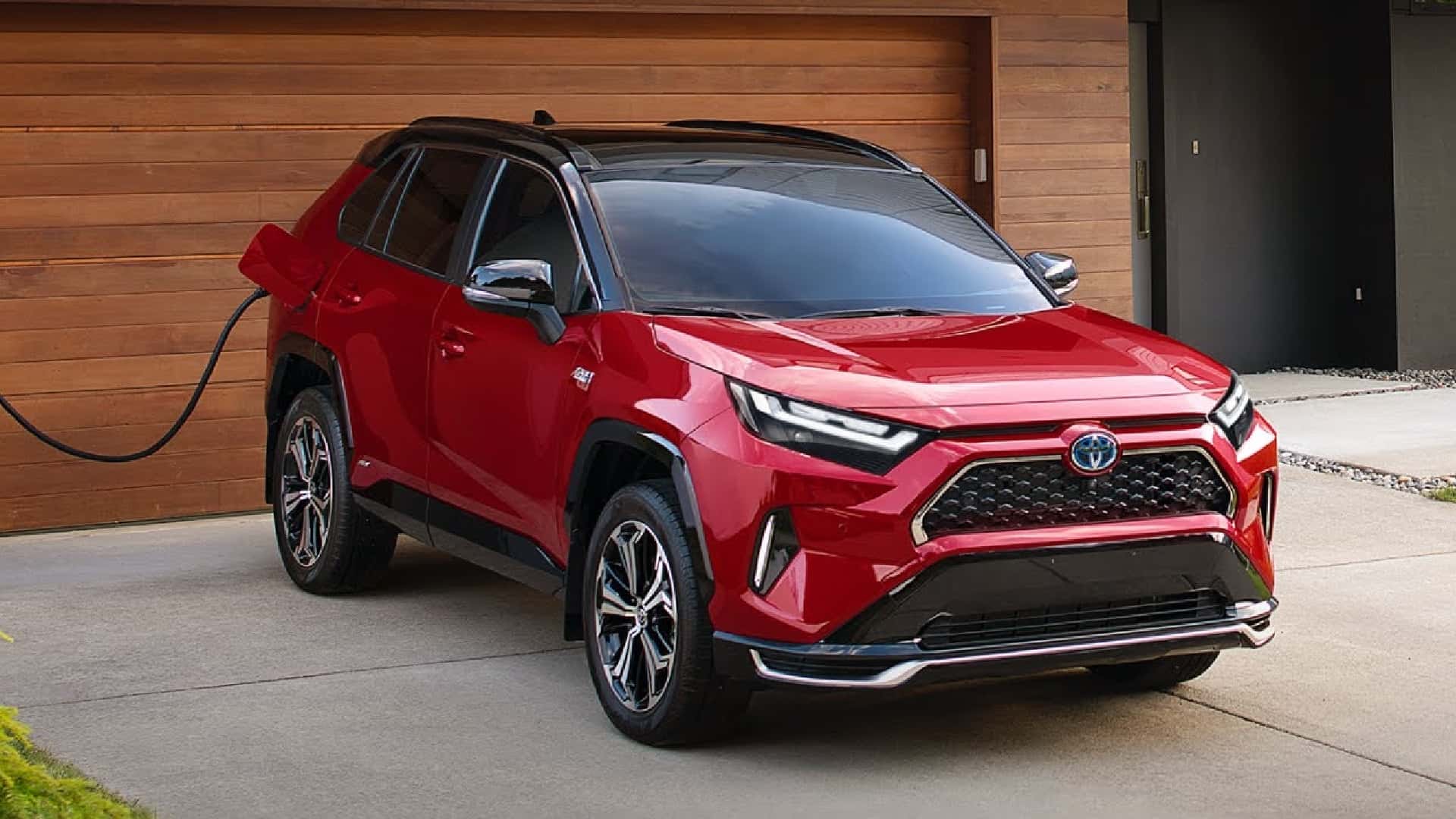
Key Takeaways:
- A recent peer-reviewed study from Toyota Research Institute North America (TRINA) challenges long-held skepticism about Plug-in Hybrid Electric Vehicle (PHEV) charging habits.
- The research reveals that American and Canadian PHEV owners exhibit significantly higher rates of plugging in their vehicles compared to their European counterparts.
- On average, Toyota RAV4 PHEV owners charge on seven out of ten driving days, while Lexus PHEV owners plug in eight to nine times per ten driving days.
- Only a small minority (9% of Toyota drivers, 4% of Lexus drivers) rarely utilise their vehicles’ electric powertrains.
- The study highlights key factors influencing charging behaviour, including convenient home charging and electricity costs.
For years, a pervasive narrative has shadowed Plug-in Hybrid Electric Vehicles (PHEVs), suggesting that owners frequently neglect to charge them, thereby undermining their environmental and economic benefits. This perspective often posits that without consistent charging, PHEVs perform no better than conventional hybrids, or in some cases, even worse due to the added weight of an unused battery.

However, new research from the Toyota Research Institute North America (TRINA) is set to significantly recalibrate this understanding, at least for the North American market. A comprehensive peer-reviewed study has revealed that the vast majority of PHEV owners in the United States and Canada are, in fact, diligent about plugging in their vehicles, actively leveraging their electric driving capabilities.
Groundbreaking Research Unveils North American PHEV Habits
The study, spearheaded by Karim Hamza and Ken Laberteaux from TRINA, delved into the charging behaviours of over 6,000 PHEV owners across the U.S. and select Canadian provinces. Their analysis, utilizing anonymised data from vehicles such as the Toyota RAV4 PHEV (formerly known as the RAV4 Prime) and the Lexus NX 450h+, provides a clear and compelling dataset.
Automakers have traditionally been reticent about disclosing specific charging statistics for their PHEV fleets. Toyota’s proactive move to share these insights through TRINA’s research marks a notable departure from this industry norm, offering unprecedented transparency into real-world PHEV usage.

High Engagement Rates Among Toyota and Lexus Owners
The findings are unequivocal: North American owners of Toyota and Lexus PHEVs demonstrate a strong commitment to charging their vehicles. On average, owners of the Toyota RAV4 PHEV plug in their crossovers on seven out of every ten driving days, translating to an impressive 70% charging rate.
Lexus owners, specifically those with the NX 450h+, exhibit even higher engagement, charging their vehicles between eight and nine times per ten driving days, corresponding to an 80% to 90% plug-in frequency. This data directly counters the long-standing criticism that PHEV owners do not fully utilise their cars’ electric powertrains.
Furthermore, the study highlighted that a remarkably small segment of this sample rarely plugged in their electrified crossovers. Only 9% of Toyota RAV4 PHEV drivers and 4% of Lexus NX 450h+ drivers fell into the category of infrequent chargers, underscoring a widespread adoption of electric driving habits among these owners.
The European Contrast: Understanding Divergent Behaviours
The high charging rates observed in North America present a stark contrast to previous studies and statistics concerning European plug-in hybrid vehicle drivers. Data from Europe has often suggested that drivers there are less inclined to regularly top up their cars’ batteries, leading to perceptions of underutilization of the electric component.
This notable divergence in behaviour can be partially attributed to differing market dynamics and incentive structures. In Europe, government incentives for companies purchasing PHEVs have sometimes resulted in these vehicles being distributed to individuals who may not have specifically chosen a plug-in hybrid. These drivers might lack convenient access to charging infrastructure, or they may simply have less motivation to prioritise electric driving, thus affecting overall charging frequency.
Conversely, in North America, consumer choice appears to play a more significant role in PHEV adoption. Drivers often actively select PHEVs, indicating a predisposition towards embracing their electric capabilities and a greater likelihood of having access to home charging facilities.
Identifying Barriers to Consistent PHEV Charging
Despite the overall high charging rates, the TRINA researchers are also keenly interested in understanding the reasons behind the minority of North American drivers who infrequently plug in their vehicles. Their current hypotheses echo common concerns heard within the broader electric vehicle (EV) discourse.
The authors suggest that some PHEV drivers may lack convenient home charging infrastructure, a critical component for consistent electric vehicle use. Additionally, the cost of electricity can sometimes make plugging in more expensive than refuelling with petrol, especially at public charging stations or during long-distance travel, presenting a disincentive for some users.
These challenges, particularly the availability and cost of charging outside of home, resonate with many current and prospective PHEV owners. The economic equation between electricity and gasoline remains a crucial factor in optimising the benefits of a plug-in hybrid powertrain, emphasizing the need for robust and affordable charging infrastructure.
PHEVs as a Bridge to Electrified Mobility
The findings from the TRINA study bolster the argument for PHEVs as a highly effective and practical solution for many consumers transitioning towards electrified mobility. For individuals who can reliably charge their vehicles at home at a reasonable cost and whose daily commutes fall within the car’s all-electric range, a PHEV offers substantial reductions in fuel consumption and associated costs.
Such vehicles provide the flexibility of electric driving for routine travel, coupled with the extended range and convenience of a petrol engine for longer journeys without range anxiety. This dual-powertrain approach can significantly reduce a driver’s carbon footprint and operational expenses, proving to be a highly efficient choice when used as intended.
The robust charging habits of North American Toyota RAV4 PHEV and Lexus NX 450h+ owners demonstrate that when the conditions are right—encompassing driver motivation, vehicle suitability, and access to charging—PHEVs can indeed deliver on their promise of fuel efficiency and reduced emissions. This research provides valuable data for policymakers, automotive manufacturers, and consumers alike, informing future strategies for vehicle electrification and sustainable transport.
The Future of Plug-in Hybrid Electric Vehicles
This study from Toyota Research Institute North America serves as a significant corrective to prevailing misconceptions about PHEV ownership. By providing solid, peer-reviewed data on actual usage patterns, it underscores the potential of these vehicles when properly integrated into a driver’s lifestyle and supported by appropriate infrastructure.
As the automotive industry continues its pivot towards greater electrification, understanding genuine consumer behaviour is paramount. The success of the Toyota RAV4 PHEV and Lexus NX 450h+ in encouraging regular charging among North American drivers offers a compelling blueprint for how plug-in hybrids can effectively contribute to emissions reduction targets and the broader transition to a more sustainable transportation future.
FAQ Section
Q1: What did the Toyota Research Institute North America (TRINA) study on PHEVs reveal?
A1: The TRINA study found that American and Canadian Plug-in Hybrid Electric Vehicle (PHEV) owners are much more likely to plug in their cars regularly than previously believed, directly challenging the notion that PHEVs are often not charged.
Q2: How often do North American Toyota and Lexus PHEV owners charge their vehicles?
A2: The study showed that Toyota RAV4 PHEV owners plug in their vehicles on approximately seven out of ten driving days (70%), while Lexus NX 450h+ owners charge between eight and nine times per ten driving days (80-90%).
Q3: What percentage of North American PHEV owners rarely plug in their cars?
A3: A small minority of the surveyed drivers rarely plug in their PHEVs, with only 9% of Toyota RAV4 PHEV owners and 4% of Lexus NX 450h+ owners falling into this category.
Q4: Why do North American PHEV charging habits differ from European ones?
A4: The discrepancy is partly attributed to European government incentives for companies buying PHEVs, which can lead to these cars being driven by individuals without personal motivation or convenient charging access, unlike North American drivers who often actively choose PHEVs.
Q5: What are the main reasons some PHEV drivers might not charge frequently?
A5: The TRINA researchers hypothesise that key reasons include a lack of convenient home charging options and situations where the cost of electricity, especially at public stations, can make it more expensive to charge than to use gasoline.
Q6: Is a PHEV a good choice for everyone?
A6: A PHEV can be an excellent choice for individuals who have access to affordable home charging and whose daily commutes are typically shorter than the car’s all-electric range, offering significant savings on fuel costs and reduced emissions.