
The Tesla Model S, launched over a decade ago, etched its name into automotive history as a trailblazer in numerous aspects of electric vehicle (EV) technology. It not only redefined perceptions of electric cars by making them desirable and performance-oriented, challenging even the most illustrious gasoline-powered supercars, but also pioneered software-defined vehicle architecture and introduced the foundational elements of autonomous driving through its Autopilot system. Crucially, in 2016, the $135,000 Model S P100D achieved a monumental feat: it became the first production EV to offer an EPA-rated electric car range exceeding 300 miles, a benchmark that was largely unprecedented at a time when most non-Tesla EVs struggled to achieve double-digit figures.
This critical milestone marked the beginning of a rapid transformation in the EV landscape. What was once an exclusive feature of a high-end luxury vehicle has, in a remarkably short span, become widely accessible, underscoring the swift evolution of battery technology and the significant decline in associated costs. The journey from a niche luxury offering to a widespread standard reflects the relentless innovation and market competition driving the electric vehicle industry forward.

The Democratisation of Long-Range Electric Vehicles
The aspiration for an electric car range of 300 miles or more has transitioned from a visionary goal to a common expectation, illustrating the profound advancements in EV engineering. An analysis of the 2025 model year reveals a staggering 43 electric vehicles available in the American market that either meet or surpass this crucial benchmark. This figure represents an extraordinary surge from a mere four models just five years prior, in 2020.
Forecasting further growth, industry projections indicate that by the close of this year, the United States market is anticipated to feature 60 electric vehicles offering an electric car range of 300 miles or greater, assuming current manufacturing plans proceed as scheduled. This expansion highlights a dynamic and competitive market where automakers are continually pushing boundaries to meet escalating consumer demands for extended travel capabilities.
Despite recent reports of certain EV models facing cancellations or delays, the pipeline for new long-range models remains robust. Upcoming introductions such as the Rivian R2, Mercedes-Benz GLC, and Lexus ES are poised to further diversify the selection available to consumers. Concurrently, established manufacturers have been diligently enhancing the electric car range of their existing fleets. A notable example is the Porsche Taycan, which debuted in 2019 with just over 200 miles of range and now boasts up to 318 miles. Similarly, the Toyota bZ4X, initially offering a maximum of 252 miles, has seen its updated variant achieve an impressive 314 miles.

Beyond the sheer availability of models, the affordability of a 300-mile electric car range has seen a dramatic improvement. The entry price for these vehicles has plummeted as manufacturers achieve greater economies of scale and introduce more budget-friendly options. A pivotal moment arrived in 2017 when the Tesla Model 3 hit the market with a starting price of $44,000, effectively reducing the cost of a long-range EV by tens of thousands of dollars overnight and making it accessible to a much wider demographic.
Subsequent years have brought even more significant price reductions. The 2024 Chevy Equinox EV set a new standard by offering 319 miles of electric car range for an attractive price of $33,495, excluding destination fees. With federal tax credits applied, its effective price could fall well below $30,000, marking a major leap in affordability. Further cementing this trend, the overhauled 2026 Nissan Leaf, launched late last year, offers an EPA-estimated range of 303 miles for a starting price of $29,990.
When adjusted for inflation, the cost of acquiring a 300-mile EV has effectively halved since the 2017 Model 3, which would command nearly $60,000 in 2026 dollars. Today, consumers have an unprecedented selection of 300-mile options priced under $40,000. This includes new entrants like the Subaru Uncharted, alongside heavily discounted models such as the Hyundai Ioniq 5, and the refreshed $36,990 Tesla Model 3. This broadened accessibility ensures that a larger segment of the American populace can now find a long-range electric vehicle that aligns with both their financial plans and personal preferences.
The Next Frontier: Will 400 Miles Become the New Standard?
As an electric car range of at least 300 miles rapidly solidifies its position as the industry’s baseline, propelled by declining input costs and evolving consumer expectations, the question naturally arises: will 400 miles follow a similar trajectory toward widespread adoption? The answer, however, appears less straightforward than the path taken by its 300-mile predecessor, though its inception also began with the transformative Tesla Model S.
In 2020, the Model S once again broke new ground, becoming the first electric vehicle to secure an EPA rating exceeding 400 miles. Building on this momentum, the Lucid Air further elevated expectations in 2021 by shattering the 500-mile barrier, unequivocally signalling the industry’s relentless pursuit of greater range capabilities. Currently, the selection of vehicles offering an electric car range of 400 miles or higher remains limited, with only eight models boasting such EPA or manufacturer ratings. Nevertheless, nascent indicators suggest a potential shift in this exclusive landscape.
Evolving Vehicle Segments for Extended Range
Historically, electric vehicles achieving an electric car range of 400 miles or more have predominantly belonged to one of two distinct categories. The first encompassed large luxury sedans, such as the Lucid Air and the Tesla Model S, which benefit from highly aerodynamic designs. The second category included substantial SUVs and pickup trucks, capable of accommodating massive, often prohibitively expensive battery packs, exemplified by models like the Cadillac Escalade IQ, Rivian R1S, and Chevrolet Silverado EV. In terms of pricing, all these vehicles have firmly resided within the luxury segment, making the 400-mile threshold an aspirational, rather than accessible, feature for the average consumer. This segment has yet to experience a “Model 3” or “Equinox” moment that would democratise a 400-mile electric car range for the mainstream market.
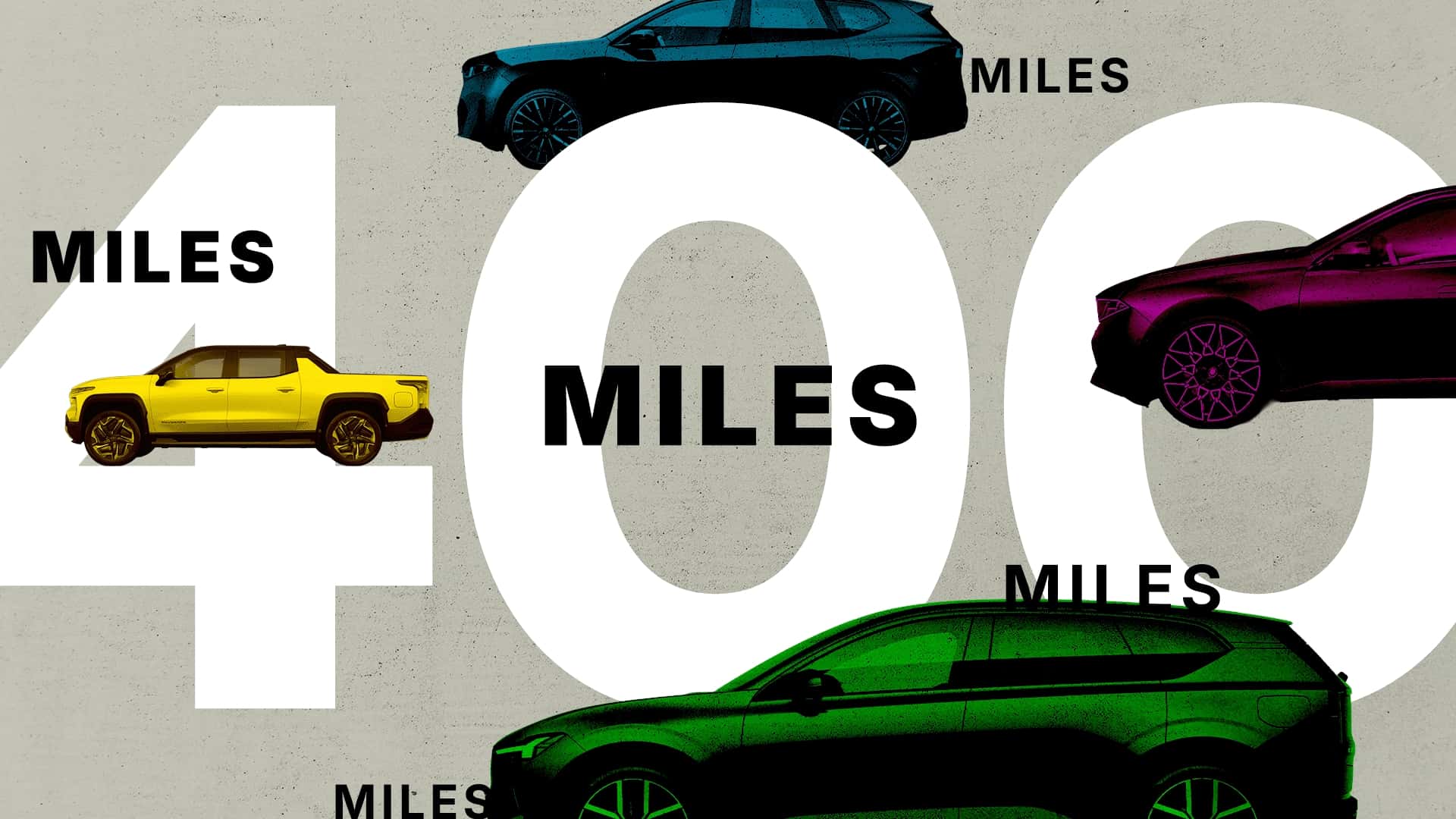
However, an intriguing development is the emergence of smaller, more affordably priced vehicles that are beginning to push past the 400-mile mark, hinting at a potential turning point. Midsized SUVs, which occupy a sweet spot in the American automotive market, are at the forefront of this shift. For instance, the BMW iX3 and Volvo EX60 are projected by their manufacturers to achieve 400-mile estimates upon their launch later this year, with expected price points around $60,000 and $70,000, respectively. These figures, while still premium, represent a significant move away from the ultra-luxury pricing typically associated with such range.
Further underscoring this trend, BMW has announced that the forthcoming 2027 BMW i3, an electric iteration of its highly regarded 3 Series sedan, is engineered to deliver an impressive 440 miles on the EPA cycle. While official pricing details are yet to be disclosed, industry estimations place this model’s cost at approximately $55,000 upon its anticipated arrival in the U.S. in 2027. These developments indicate a strategic effort by automakers to integrate advanced battery technologies into more diverse and potentially mass-market segments.
Technological Innovation Driving Enhanced Range
The ability of these newer models, particularly the BMW iX3, Volvo EX60, and BMW i3, to achieve exceptional electric car range figures stems from a common thread of innovative battery design. All three models leverage novel battery layouts that meticulously focus on reducing weight while simultaneously boosting energy density. A key technological advancement employed is the “cell-to-pack” approach, where individual battery cells are installed directly into the pack casing. This design eliminates the need for smaller, intermediate module structures, which not only saves weight but also enhances volumetric efficiency and thermal management within the battery pack.
Furthermore, these vehicles integrate the battery pack directly into the floor of the vehicle’s chassis, contributing to a lower centre of gravity and improved structural rigidity, alongside optimising interior space. This holistic approach to battery integration and design plays a crucial role in achieving the impressive long-range ratings cited by their manufacturers. The fundamental forces that propelled the 300-mile electric car range into the mainstream—fierce competition among brands, continuous improvements in battery technology, systemic efficiency gains across vehicle components, and gradual reductions in battery manufacturing costs—remain potent drivers. These factors suggest that a 400-mile capability is likely to become increasingly prevalent, particularly within higher-end segments where discerning buyers are often willing to invest more for cutting-edge features and performance.
Navigating the Future: Factors Influencing 400-Mile Ubiquity
The pace at which a 400-mile electric car range achieves widespread adoption, and indeed its ultimate prevalence, hinges on a confluence of intricate factors. The trajectory of battery cost reduction stands as a primary determinant. While the industry has witnessed significant declines in battery expenses over the past decade, driven by economies of scale and technological progress, the rate of these year-over-year savings has notably slowed compared to earlier periods, according to analyses by BloombergNEF. This deceleration could temper the speed at which ultra-long-range capabilities become economically viable for broader market segments.
Battery Chemistry and Market Segmentation
A crucial aspect shaping the future of electric car range is the evolution of battery chemistry. The global decline in EV battery costs is largely attributable to the ascendance of lithium-iron-phosphate (LFP) chemistry. LFP batteries offer compelling advantages: they are generally more affordable and exhibit superior durability and longer cycle life compared to their high-nickel counterparts, which have traditionally dominated the market. However, LFP batteries typically possess lower energy density, meaning they store less energy per unit of volume or weight. This trade-off points towards a potential divergence in the future EV market.
It is plausible that lower-end electric vehicles will increasingly utilise LFP batteries, providing a cost-effective solution but consequently offering moderate, rather than ultra-long, electric car range. Conversely, more expensive vehicles will likely continue to employ higher-end chemistries, which are better suited to delivering 400-plus miles. This segmentation could create distinct market offerings, catering to different price points and range requirements.
Technical Hurdles and Breakthroughs
Packaging limitations also present a significant challenge. Integrating a 400-mile electric car range into smaller vehicle platforms, akin to a Nissan Leaf or Chevy Equinox, would necessitate further breakthroughs in battery energy density. Such advancements could materialise through incremental improvements to conventional lithium-ion chemistries, optimising their performance and packaging efficiency. Alternatively, a “wild-card” technology like solid-state batteries holds immense promise. While solid-state batteries are anticipated to first appear in very high-end and specialised vehicles due to their complex manufacturing and cost, their potential to drastically alter the range paradigm over time remains a powerful motivator for ongoing research and development.
The Evolving Definition of “Enough” Range
Beyond technological and economic considerations, the ultimate question revolves around actual consumer needs and preferences regarding electric car range. The automotive and charging industries are jointly engaged in an aggressive campaign to make recharging faster and more convenient. Recent innovations, such as BYD’s unveiling of cars capable of recharging from 10% to nearly full in an astonishing 10 minutes, exemplify the rapid pace of progress in charging technology. Concurrently, the expansion of the charging infrastructure is accelerating, with the U.S. fast-charging network experiencing a substantial 30% growth last year, according to Paren.
In a future scenario where charging stations are ubiquitous and the recharging process rivals the speed of conventional petrol refuelling, the imperative for an exceptionally large range buffer might diminish. The fact that a significant portion of the market has converged around a 300-mile electric car range suggests that this capacity provides ample peace of mind for many EV buyers, even in the absence of monumental technological leaps in battery density. The sales figures of range champions like the Lucid Air, despite offering up to 512 miles in its latest iteration, have not outpaced more practical long-range offerings. Conversely, Tesla continues to sell hundreds of thousands of Model 3s and Model Ys annually, with their ranges typically spanning between 321 and 363 miles, indicating a strong market acceptance for this segment.
The average American motorist travels approximately 30 miles daily. This suggests that a 300-mile electric car range would necessitate recharging roughly once a week, assuming typical usage patterns that avoid fully depleting the battery or consistently charging to 100% (practices often not recommended by EV manufacturers for battery longevity). The upper limits of a vehicle’s range are predominantly engaged during infrequent, longer journeys. Even in these scenarios, a 400-mile range might border on overkill, particularly for vehicles equipped with rapid charging capabilities. For most drivers, the optimal balance between cost, battery size, and practical usability likely resides somewhere between 300 and 400 miles.
An electric vehicle offering approximately 300 miles of range, coupled with decent charging speeds, facilitates several hours of highway driving, followed by a relatively short 20-to-30-minute stop for recharging, allowing the journey to continue. For individuals who embark on extended road trips only a few times each year, the economic rationale for investing thousands more in a larger battery solely to gain an additional 10 or 20 minutes at a charging station may not hold up. The pragmatic choice often leans towards sufficient, rather than maximal, range.
The “What If” Factor in Consumer Psychology
However, there remains a powerful psychological element that often sways consumer decisions: the “what if” scenario. Car buyers frequently make purchasing choices not based on their day-to-day needs, but on the anticipation of rare, extraordinary circumstances. This phenomenon explains the prevalence of large SUVs and pickup trucks, such as F-150s and Tahoes, on highways often carrying only one or two occupants. This inherent desire for over-preparedness, for the most capable vehicle within (or sometimes beyond) their budget, extends emphatically to electric car range. It is this profound psychological driver, the craving for reassurance and capability for any eventuality, that fundamentally ensures the continued relevance and demand for the 400-mile EV, solidifying its place in the evolving automotive landscape.